Smart Citizen meets Meshtastic hackathon at FAB25
Fab Lab Barcelona and Meshtastic kicked off an exciting collaboration at FAB25 with a hackathon developing a new LoRa-enabled Smart Citizen Kit.
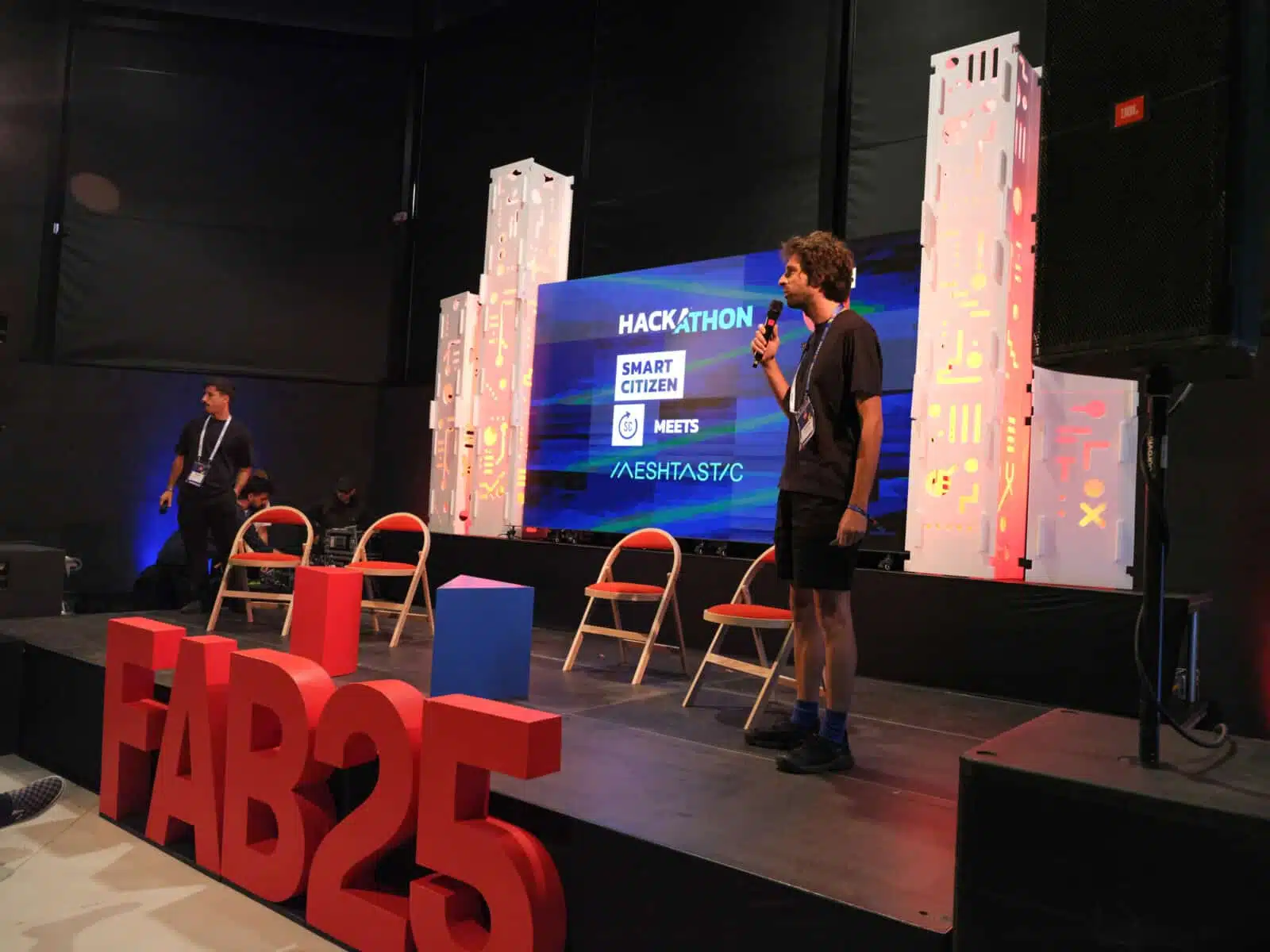
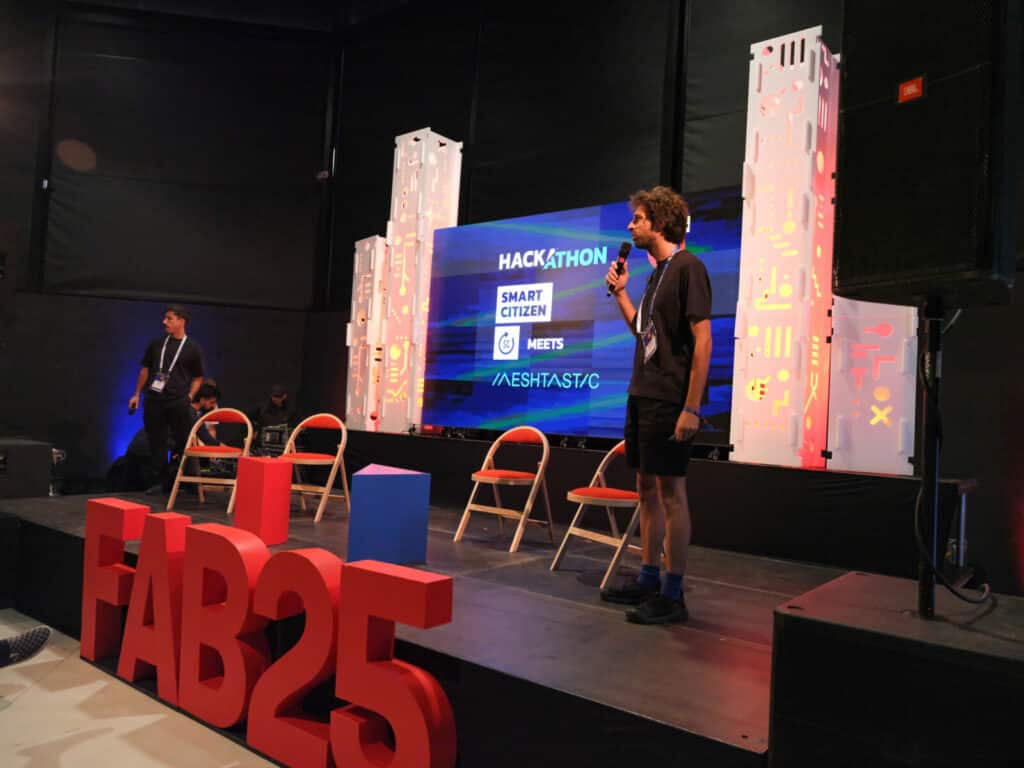
This year Fab Lab Barcelona attended FAB25, the global gathering of Fab Labs in Czechia, loaded with activities: we ran 11 workshops, 2 Academany working groups and the Smart Citizen meets Meshtastic hackathon. This blogpost is about the hackathon, which focused on the first stages in the development of a new Smart Citizen Kit, a new version bringing LoRa capability and leveraging the popular Meshtastic protocol, all while doing it together with contributors from the Fab Lab Network. This new version will finally offer a data logging option other than Wi-Fi, and a powerful one at that. It was really an amazing and intense week at FAB25, and we wanted to share a wrap up post on the progress made during the event. This is just the beginning of the Smart Citizen Meets Meshtastic collaboration, but it sure started with a bang!
Who was part of the hackathon
The core team was made up of of interdisciplinary experts from Fab Lab Barcelona, the University of Glasgow, Seeed Studio, Meshtastic, and Hackster who came together on-site and remotely and met with many Fablab experts worldwide. Friends from all over the world, from Fablab Vestmannaeyjar, Fablab TU Ilmenau, Fablab Onl’fait, Fablab UDLA and so many others we won’t be able to list here, joined us in the collective effort, and shared with us a whole week of work, redefining the future of environmental sensing together.
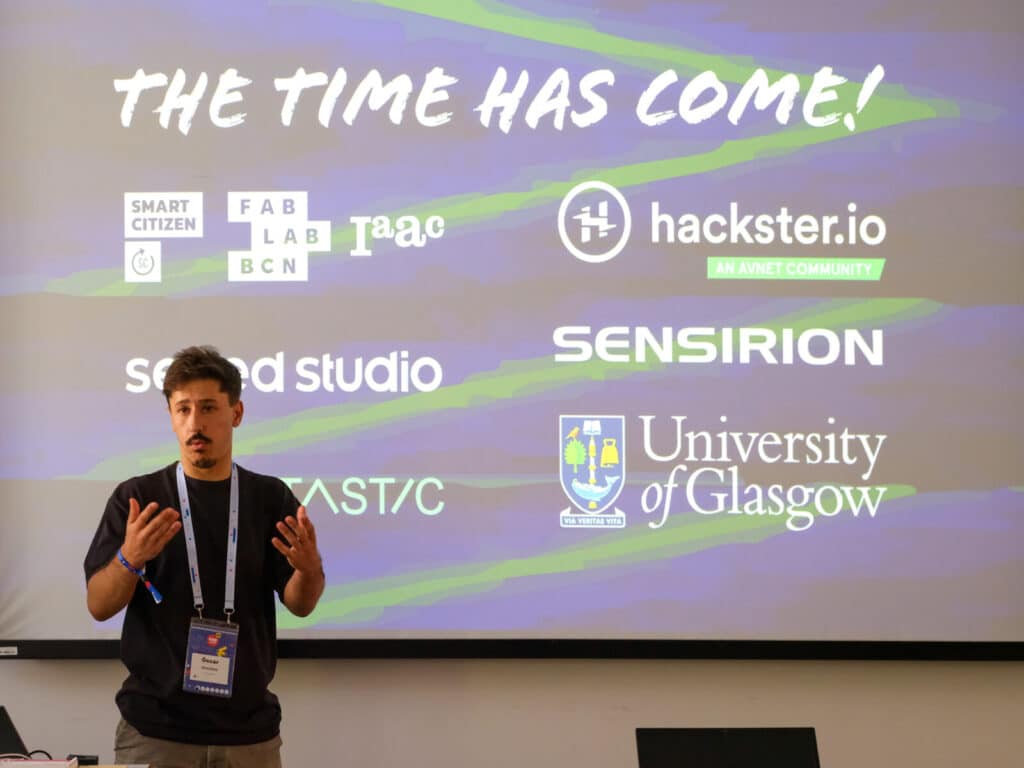
In parallel to all this, we are running a worldwide challenge with hackster.io, where three contenders from different parts of the world are working on a set of specific issues that benefit both Smart Citizen and Meshtastic projects, as well as anyone that wants to make use of our joint contributions. We have fantastic prizes for the winners, including a grant for Fab Academy Barcelona and support for expenses for the Maker Faire in Shenzhen!
What we set out to achieve
We had one main goal during the FAB25 Hackathon: let people know we are redefining how we can collect environmental data with accessible, easy to use, decentralized networks. But we didn’t travel all the way to Czechia to make presentations, we wanted to get our hands dirty coding, designing, hacking, 3D-printing and collecting environmental data with Meshtastic devices on the ground! We had an ambitious plan: 3 days of firmware development and sensor integration, learning how to configure Meshtastic devices, how data flows into the Smart Citizen Platform and how to deploy a basic Meshtastic network collecting environmental data. Being in two venues during the Fab25 week, we used the first part of the week to get to a proof of concept in Brno, and then we moved on and deployed sensors in Prague.
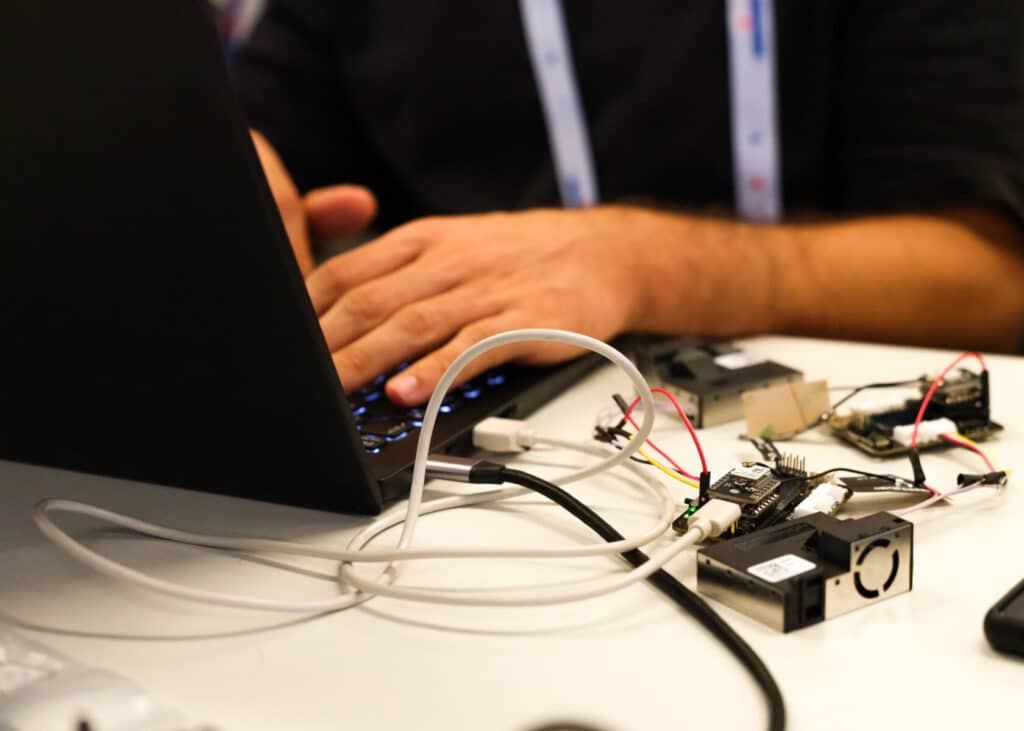
We used Seeed Studio XIAO ESP32-S3 with SX1262 LoRa antennas, and made a first setup using Seeed Studio Meshtastic compatible hardware. We wanted to integrate a long list of environmental sensors. Thanks to the partnership with Sensirion, we also got some new PM sensors, which are now being integrated together with contenders from the hackster.io challenge.
Laying the groundwork for this collaboration that holds incredible potential, we wanted to work in three different areas in parallel:
- Firmware integration (to make the data collection technically possible) in our smartcitizen-meshtastic fork
- Enclosure design (to make the data collection practically possible) in our enclosures repository
- Data ingestion (to get the data to our platform so that we could visualize it)
What we achieved
This is probably the most difficult part of this blogpost. The most important achievement is that we managed to ingest environmental data for three days in Prague, using 5 Meshtastic capable sensors and 4 Smart Citizen 2.3 Kits. Data in this case is not really relevant and the number may not be as impressive as other Meshtastic deployments, but the fact that we managed to have devices moving around in the venue, sending CO2, temperature, humidity, noise and PM data was a great achievement for us as a first step and proof of concept! This data made it all the way to the platform hopping from node to node using moving gateways that we were carrying around, including the Seeed Card Tracker T1000-E.
In practical terms, we managed to integrate a CO2 sensor by Sensirion (SCD4X), a PM sensor, a very good ADC (for measuring analog signals like the ones coming from chemical sensors), and a formaldehyde sensor! This resulted in various pull requests and many new contributors!
We might say though, that the most relevant achievements were the new relationships we created before and during the hackathon. Beyond the newly established relationship with our Meshtastic friends, our long-lasting relationship with Seeed Studio as a global distributor and our hackster.io friends, we are now in touch with great new partners from the network of Seeed Rangers such as Robert Boggs (kayna-funkt), Davide Gomba (Officine Innesto) and Salman Faris (MakerGram), as well as other like-minded initiatives like the Ribbit Network from Keenan Johnson. All of this while working alongside other friends from various Fablabs that we hope to keep on board for this collaborative effort. Finally, from the application side, our standing academic collaborations together with the Urban Big Data Center of the University of Glasgow ensure that this work finds applications (although we have no doubt it will!). In case you want to see our presentation during FAB25, check out the video below!
What’s next?
Let’s be honest: The work was very ambitious and we still have plenty to do. Beyond integrating more sensors into Meshtastic’s firmware, there’s a whole lot of technical development we need to work on, such as making interfaces for controlling sensors (which would allow us to calibrate them), or making sure we ingest data properly, ensuring it makes it all the way through to our platform, while maintaining our existing data structure.
Now, slow but steady, beyond technical development, we want to make sure we are building a community of people interested in using Meshtastic for environmental monitoring purposes, making use of distributed and decentralized networks that do not require ISPs or logistics, and that both, Meshtastic users and Smart Citizen users are happy with the end result. A lot of discussions are needed for this. Anyone who is interested is welcome to join the development, or the testing on many fronts. We have various channels for this: from our github repositories, to the forum, or directly on our discord channel (send us an email or join Seeed Studio’s discord channel and search for smartcitizen-meshtastic).
We are very excited to make this effort, and we are looking forward to seeing people’s contributions. We are also keen to see ideas flow, such as potentially, a FAB26 badge with Meshtastic capabilities? Or even, a Meshtastic node in each Fablab worldwide to give support to local communities sensing their environment? Write to us with ideas at [email protected], or post them on the forum.