The Right to Prototype
Alternative Presents for Plural Futures
By Guillem Camprodon
This essay was first published in Reclaiming Hope: Navigating (Un)certainty, Imagining Better Futures, the companion book to the 2025 symposium at the EPICentre in Nova Gorica. The event gathered designers, researchers, artists, and activists to explore how design and architecture can help imagine more just and resilient futures.
Within this context, The Right to Prototype redefines prototyping as a political and cultural act rather than a technical step. Drawing on the work of Fab Lab Barcelona and the Master in Design for Emergent Futures (MDEF), it argues for prototyping as a practice of inquiry and hope—one that embraces uncertainty, fosters collective intelligence, and opens pathways to plural, grounded futures.

Prototyping as a Critical Act
Prototyping is often understood narrowly as a practical step in a linear process, one in which concepts are quickly transformed into tangible artefacts that serve as temporary solutions to predefined problems. This prevalent interpretation significantly underestimates the transformative potential of prototyping.
Founded in 2007 by IAAC, Fab Lab Barcelona was one of the first Fab Labs in Europe. In 2017, to celebrate our tenth anniversary, we launched the Master in Design for Emergent Futures (MDEF), in collaboration with ELISAVA, as a way to push the boundaries of what Fab Labs are and what they can do. For us, prototyping is fundamentally a critical act: an intervention that challenges dominant narratives, disrupts entrenched power relations, and reveals the underlying systems shaping our realities.
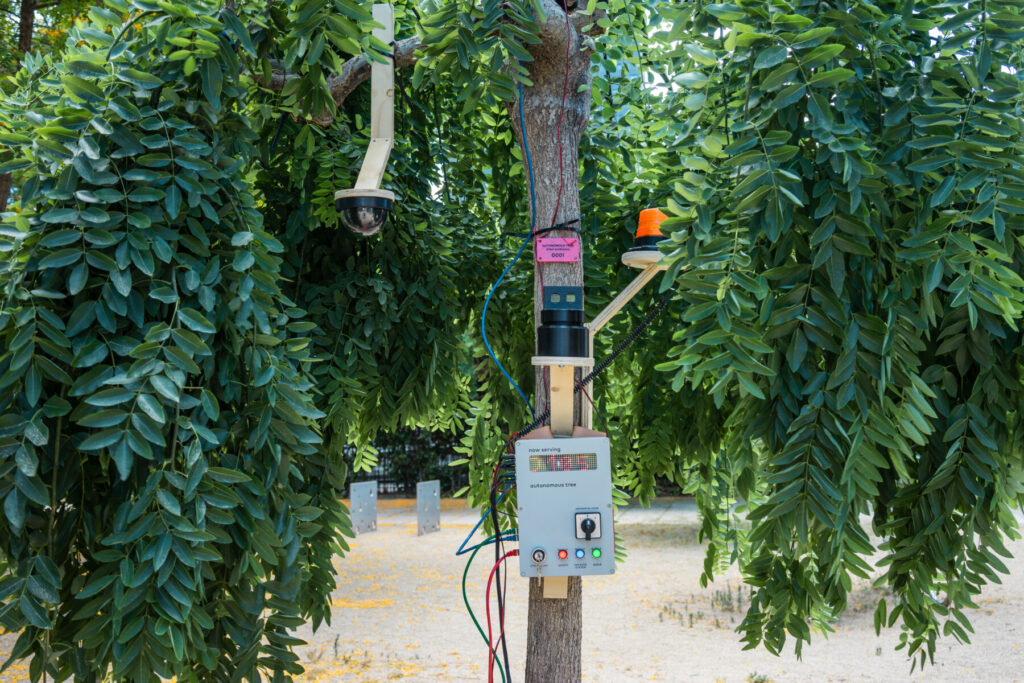
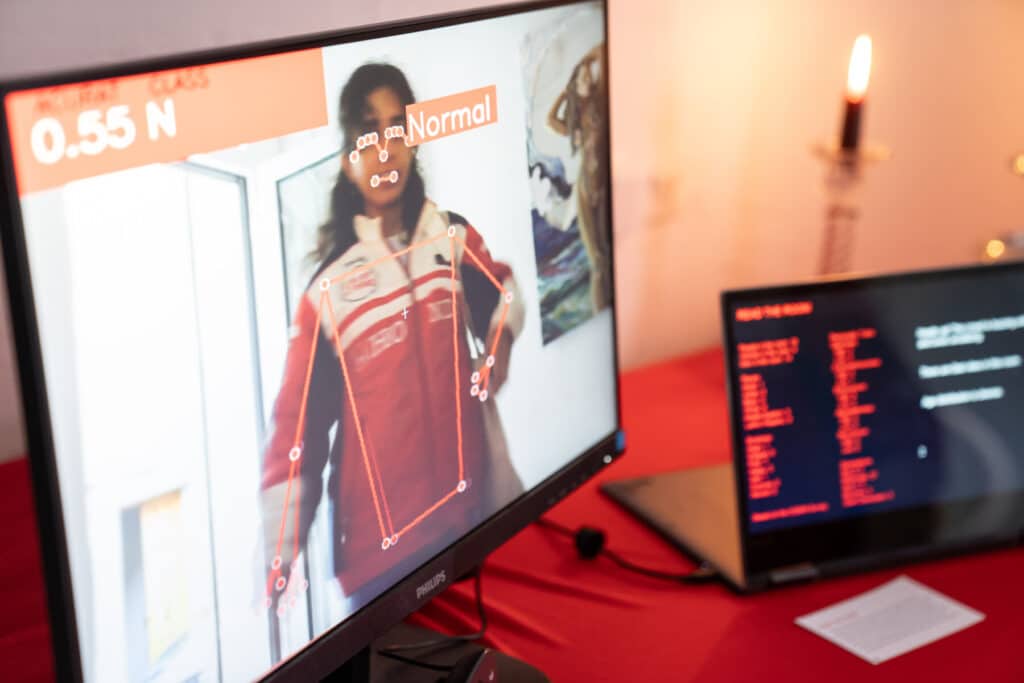
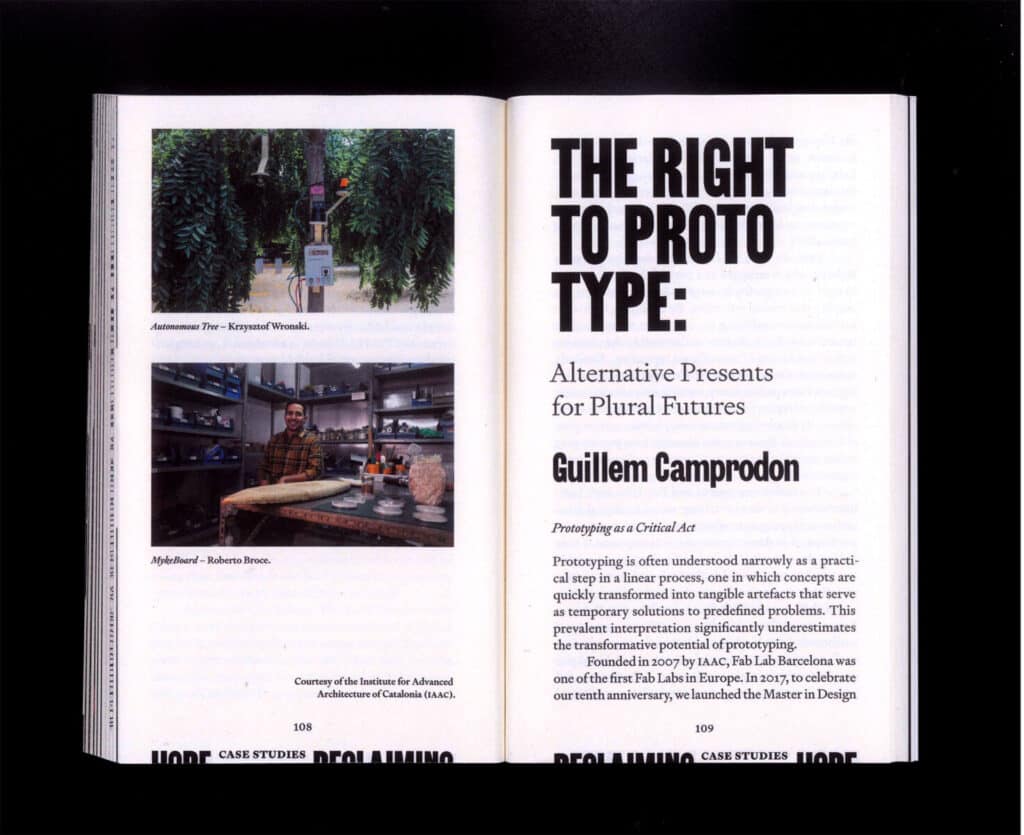
Projects such as Unseen Exposures by Carmen Robres, which emerged as a part of the Studio of the Master in Design for Emergent Futures (MDEF), exemplify this critical reframing. By deploying high-tech installations employing AI, computer vision, and interactive feedback, Robres makes visible the often-invisible machinery of surveillance capitalism. Similarly, Autonomous Tree by Krzysztof Wronski transforms a living tree into a participatory, socially authoritative entity capable of levying fines on humans for ecological harm, effectively disrupting conventional human–nature power hierarchies. Both projects illustrate how prototyping serves as a reflective practice, opening pathways to interrogate, challenge, and reimagine the present.
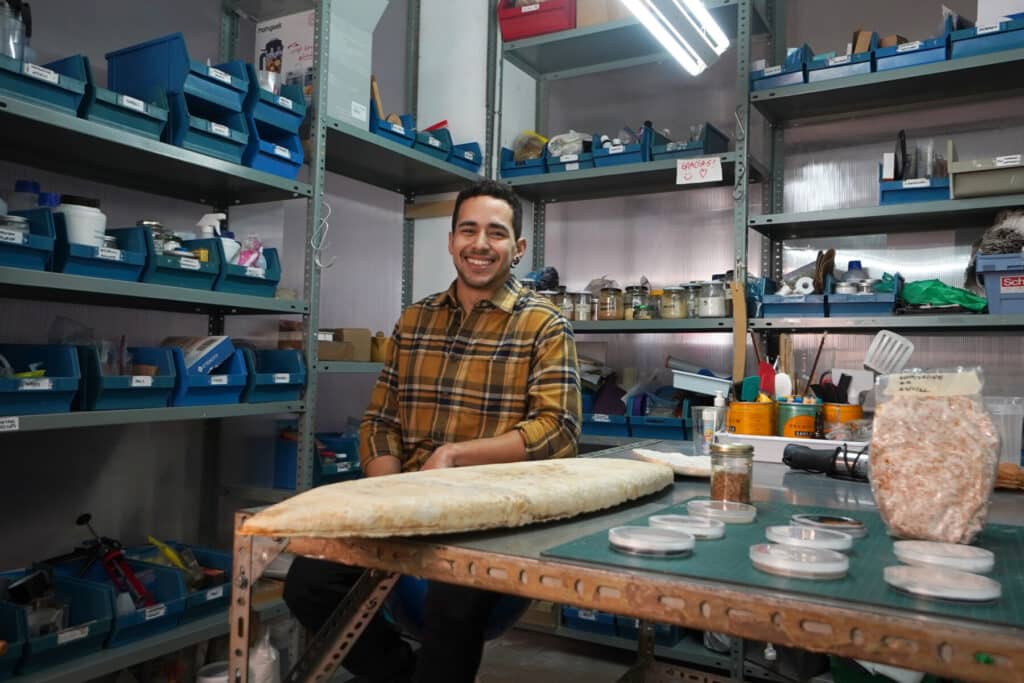
The maker movement and Fab Labs have been instrumental in democratising access to digital fabrication, reshaping our collective understanding of who participates in design processes. Just as personal computing democratised digital technology, personal fabrication has empowered individuals and communities to actively engage in the physical making and unmaking of their worlds. MykeBoard, developed by Roberto Broce, encapsulates this philosophy. Broce prototyped surfboards from biodegradable mycelium composites, challenging the dominance of petrochemical-based production of sporting and leisure equipment. To harness the full potential of prototyping, we must challenge traditional views of creative technologies as mere execution tools. Technology can catalyse critical engagement with broader societal issues, facilitating a rethinking of design and social relations. In this way, Fab Labs become spaces for disrupting conventional design methodologies and exploring diverse narratives. This approach ensures emergent technologies actively contribute to challenging existing power structures rather than reinforcing them.
Situated Intelligences and Commoning Practices
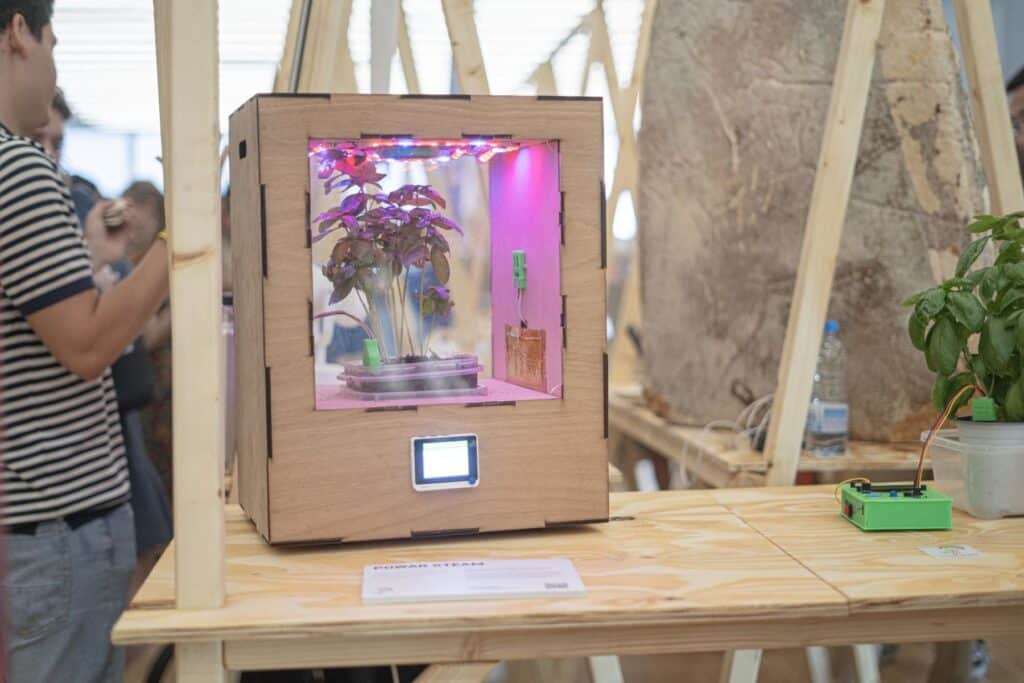
In an era dominated by centralised innovation and extractive AI, we advocate for situated intelligences: ways of knowing that emphasise care, local context, and hands-on making. This approach grounds technological interventions in the lived realities and specific cultural contexts of communities and acknowledges diverse forms of knowledge and learning. The project POWAR by Pablo Zuloaga offers a tangible example. It employs an open-source climate chamber to simulate future weather scenarios for smallholder farmers, coupling digital fabrication techniques with environmental sensing technology.
Fab Labs, as contemporary agoras, operate at the intersection of technology, community, and creativity, facilitating collective forms of imagination and knowledge sharing. They are spaces where diverse communities engage in collaborative, adaptive practices and cultivate emerging and commoning intelligences. The project Aquí, created by Clément Rames and Lea Karrasch, epitomises this ethos. By designing modular, co-created urban furniture from recycled materials through community workshops, Aquí reclaims urban spaces, fostering civic imagination and inclusive participation.
Reclaiming Hope through Plural Futures
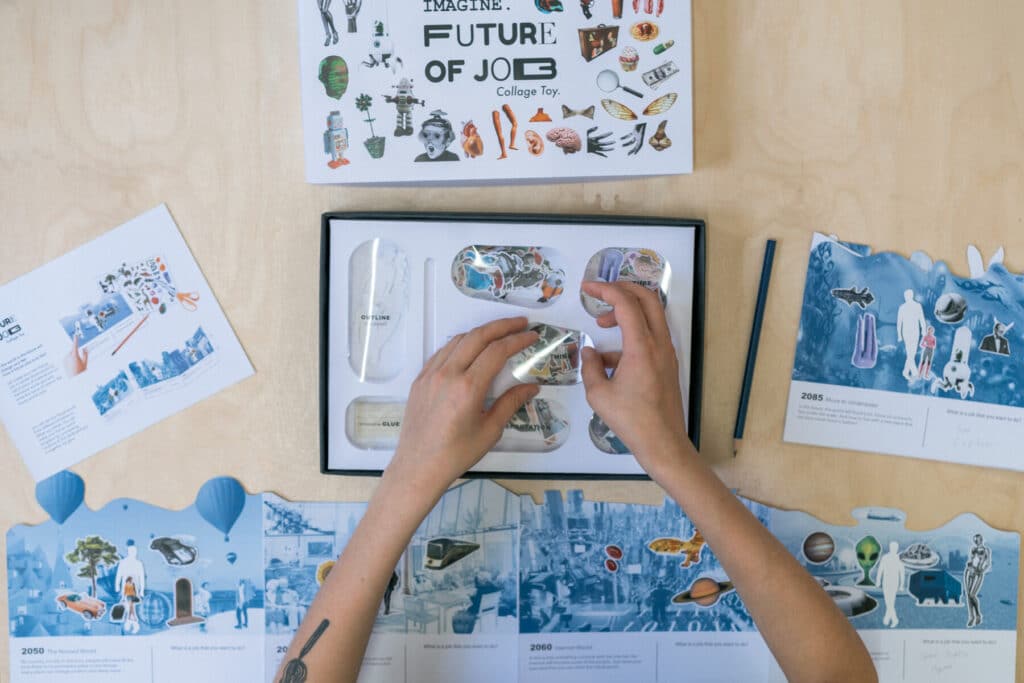
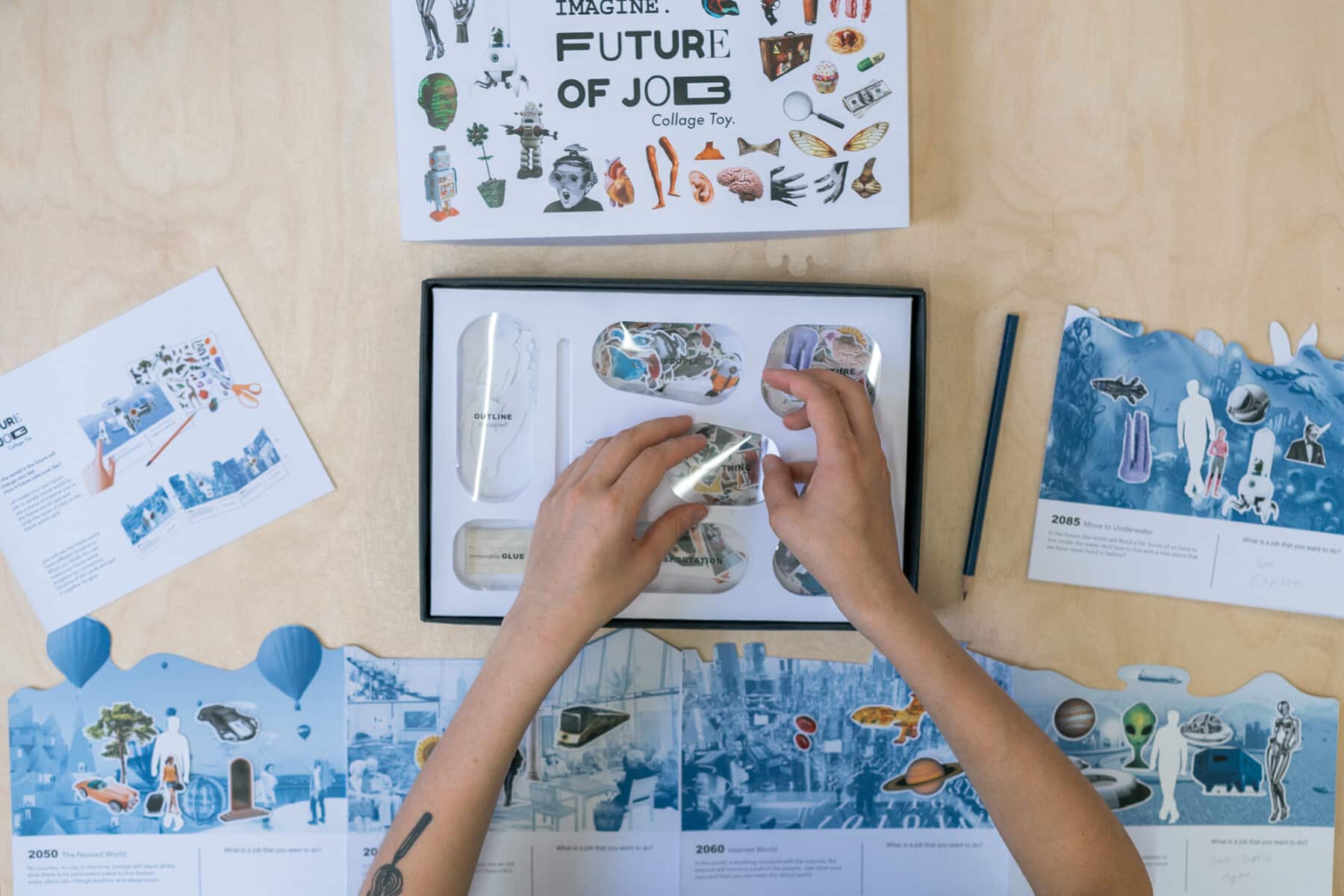
To prototype alternative presents is fundamentally an act of reclaiming hope. By encouraging communities to collectively envision diverse and plural futures, prototyping serves not as a tool for prediction but as an invitation for active participation and agency in world-making. Future of Jobs x Radical Imagination by Wongsathon Choonavan and Dafni Gerodimou embodies this spirit by engaging children through speculative design tools, interactive workshops, and playful artefacts to imagine professions that do not yet exist.
Ultimately, reclaiming hope through prototyping requires acknowledging design as a practice deeply relational, adaptive, and inclusive. Within this reframing, prototyping transcends its conventional role as a tool for testing and validation. Instead, it becomes an exploratory process of inquiry and reflection, facilitating critical engagement with complex social and cultural questions. Prototyping thus serves not just to produce functional objects, but as a dynamic practice that interrogates design’s deeper implications within local contexts.
Through prototyping as inquiry, Fab Labs emphasise relational design practices, embracing uncertainty and adapting to plural ways of knowing and doing. This approach grounds interventions in situated, appropriate, emerging, and commoning practices, moving beyond critique alone to foster active reorientation towards collaborative and inclusive transformation. At Fab Lab Barcelona and through the Master in Design for Emergent Futures, we invite designers, makers, and communities to reclaim hope, empowering them to collectively build plural alternative presents from the ground up.