MDEF Research Trip 2026: Senegal
MDEF Students Research trip to Senegal, a journey focused on understanding how practices of making, repairing, and sustaining life are embedded in everyday systems, and what design can learn from them.
From March 19th to 30th, 2026, the first-year students of the Master in Design for Emergent Futures (MDEF) travelled to Senegal for the annual research trip. Over ten days, the group moved across different contexts—from Dakar and Saint-Louis to Thiès and the southern region of Casamance.
The trip focused on understanding how practices of making, repairing, and sustaining life are embedded in everyday systems, and what design can learn from them.
Learning from Context
Rather than approaching Senegal as a case study, the research trip is framed as a situated learning experience. Through field visits, workshops, and conversations, students engaged with artisans, collectives, and community initiatives to understand how knowledge is produced and shared through practice.
Across locations, a common thread emerged: resourcefulness. Materials are reused, adapted, and transformed through processes that are both practical and cultural, challenging conventional ideas of innovation and offering alternative perspectives on design.
Saint-Louis: Materials, Repair, and Collaboration
In Saint-Louis, students explored practices of reuse and collective making.
Working with local artist Maisa, the group developed sculptural pieces using recycled metal, particularly bicycle parts. This work highlighted repair as both a technical and creative practice.


In the old fishing port, students collaborated with local fishermen, repurposing painted wood from decommissioned boats into small pieces of furniture. As part of this process, they also designed and built simple games for children in the fishing neighborhood, connecting material reuse with social engagement.


The experience was complemented by work with Hahatay, where a collective sculpture was developed together with other residents. The resulting piece, a dragon rising above the Hahatay facilities, represents a protective figure for the local community of Gandiol, where the association is based.


Thiès: Recycling as System
In Thiès, the visit to Proplast provided insight into how plastic waste is processed and reintroduced into local production systems.
This experience highlighted how recycling operates as an adaptive infrastructure, linking local practices to global material flows and raising questions about the role of design within these systems.
Casamance: Craft, Materials, and Knowledge
In Casamance, particularly in Edioungou, students worked closely with local women-led associations and artisan communities.
Activities focused on hands-on engagement with different craft practices. Students participated in loom weaving and basket weaving using palm leaves, gaining insight into techniques rooted in local knowledge and everyday use.


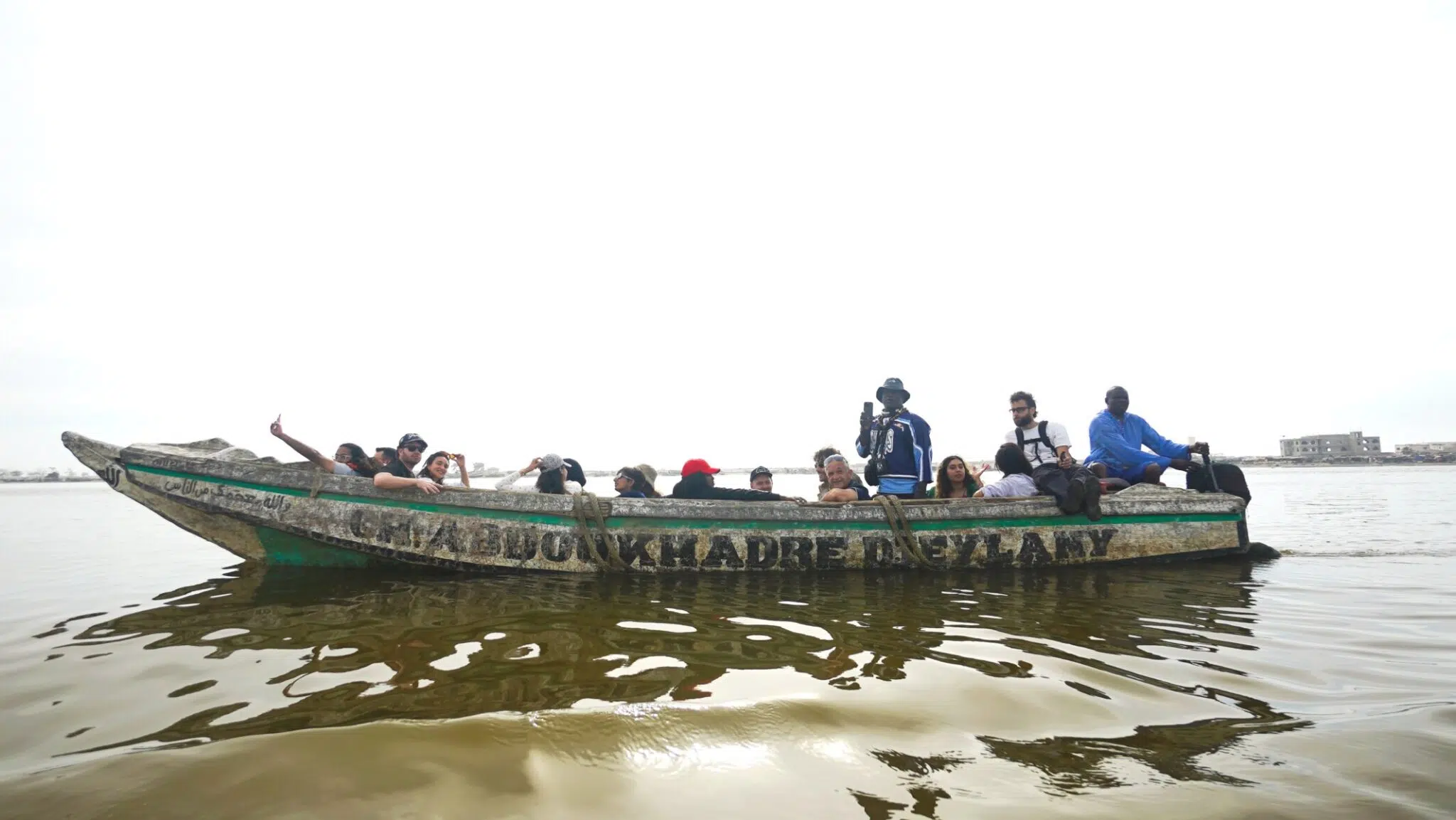
They also took part in the full process of pottery making, beginning with the collection of clay from the river. Travelling by pirogue, the group gathered raw material directly from its source before shaping and firing it using traditional methods.
In addition, students explored batik, a traditional textile printing technique that uses wax to create patterns before dyeing the fabric.


These experiences highlighted how craft practices are closely connected to local ecosystems, material availability, and knowledge transmission within the community.
Dakar: Memory and Long-Term Infrastructures
In Dakar, the trip addressed historical and social dimensions.
A visit to Gorée Island offered an important context to reflect on the history of the transatlantic slave trade.
In the neighborhood of Sam Sam 3, students were hosted by Sister Regina, a nun who has been working in the area for over 20 years. Through her long-term commitment, she has developed community schools focused on cooking, carpentry, and agriculture, providing an example of how sustained, locally embedded initiatives can function as social infrastructure.


Methodology and Approach
The research trip builds on the first phase of the MDEF program by creating a temporary shift in context. It encourages students to step outside familiar environments and engage with different ways of living and making.
Throughout the trip, students were asked to:
- engage respectfully with local communities
- document processes using different media
- reflect on their role and position as designers
- identify connections between material practices, social systems, and ecological conditions
Daily group reflections were used to share observations and discuss insights collectively.
From Observation to Future Work
The research trip does not aim to produce final outcomes. Instead, it supports the development of questions and lines of inquiry that continue into the Design Studio.
Many of the themes explored during the trip—such as material reuse, community infrastructures, and regenerative practices—will inform ongoing student projects throughout the year.
A Situated Approach to Design
Overall, the experience reinforces a key aspect of MDEF: design is not only about proposing solutions, but about understanding and working within existing systems.
By engaging directly with different contexts, students develop a more grounded and critical approach to design—one that takes into account local knowledge, resource constraints, and the complexity of real-world environments.

