
Future Technologies for Sustainable Fashion | Three Years of Innovation, Collaboration & Imagination
For 3 years, FTSF program has been quietly shaping the future of how we think about fashion, sustainability, and technology.
Over the past three years, the Future Technologies for Sustainable Fashion (FTSF) program has been quietly shaping the future of how we think about fashion, sustainability, and technology. Born under the umbrella of the EU Horizon 2020 research and innovation project ATTRACT, this educational program brought together three powerhouse institutions: Fab Lab Barcelona | IAAC, IED, and IdeaSquare-CERN.
Together, they opened the doors for students and educators to explore the emerging — and often experimental — space where fashion meets technology, through the lenses of critical design, future scarcity, sustainability, and even space habitation.
Why Did This Matter?
Fashion is one of the most resource-hungry industries on the planet, and as we face the very real challenges of climate change, dwindling resources, and the need for more circular economies, the question is no longer if fashion needs to change — but how.
FTSF invited students to tackle this big question head-on, with the help of cutting-edge tools, fresh methodologies, and a mindset that wasn’t afraid to think beyond Earth itself.
How Did It Work?
The heart of the program was multidisciplinary student teams — bringing together talents from design, technology, and beyond. These teams were guided by a mix of tutors, experts, and tech specialists, all focused on pushing the boundaries of what’s possible in fashion, textiles, and wearable design.
Throughout the program, students didn’t just sit in lecture halls. They rolled up their sleeves in intensive making sessions, worked with digital manufacturing tools, and explored embodied design ideation — essentially using their own bodies and experiences to inspire creation. They also dove into first-person perspective methodology (think: designing from the wearer’s point of view) and multiverse thinking, which they got to experience up close during a research trip to IdeaSquare/CERN.
Partners & Technologies
Some of the methodologies we played with…
H3D-VISIOnAIR a head-worn augmented reality (AR) system using multi-spectral cameras, real-time data processing, and a stereoscopic head-mounted display to provide AR overlays visuals.
MEGAMORPH is a technology based on a Graphene MODulator (GMOD), a reflective-type display for VR/AR HMD/HUD applications and other portable devices.
Advanced Heat Exchange Devices (AHEAD), 3D-printed pipe segments with integrated sensors for sensing fluid parameters.
Some of our wonderful collaborators…
KNITERATE, a compact, digital knitting machine that lets users create custom knitwear—like scarves, sweaters, and accessories—directly from digital designs.
LA MAQUINA, an ecosystem integrating 3D printing into standardized chain production, decentralizing manufacturing while keeping its engineering hub in Barcelona.
What Came Out of It?
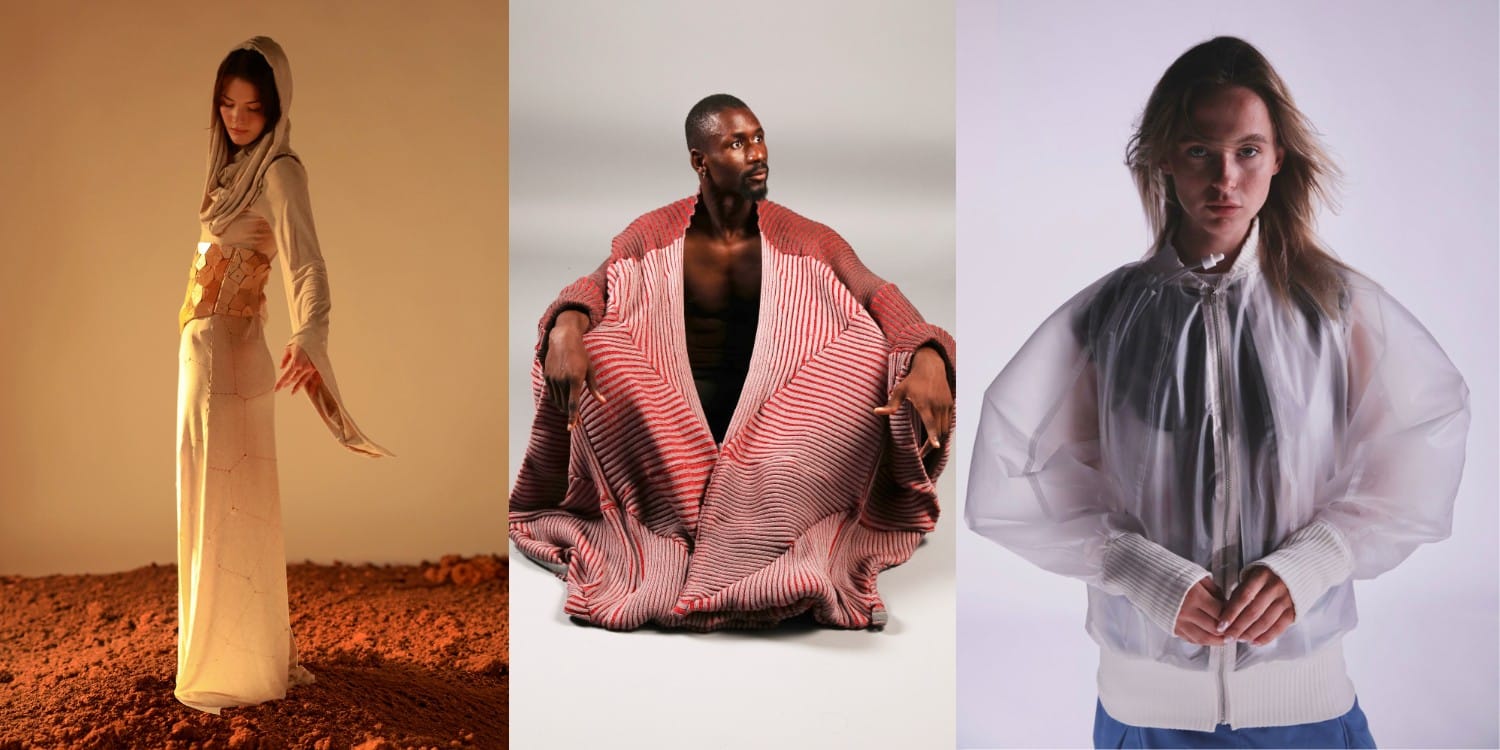
Across the three years, the program sparked a wave of innovative prototypes — not just cool gadgets or flashy clothes, but thoughtful, critical responses to societal challenges. From garments that explore future material scarcity, to wearables designed for off-world living, the students’ projects reflected a deep engagement with the big questions of our time. Check the results below.
Even more importantly, the program fostered a space for experimentation, collaboration, and cross-pollination between disciplines — creating a new generation of designers and technologists who are prepared to shape a more sustainable, thoughtful, and adaptable fashion industry.
A special thank you to our incredible mentors and tutors!

Kambio Inspired by a deep concern for the future of the planet and the fashion industry’s significant environmental impact, this project addresses the uncontrolled and accelerated production of fashion. The project allows users to program their garments by manipulating Kombucha microorganisms to grow the garment that they design. The user can experience a symbiosis between who they are and what they wear. Project by Saskia Helinska, Vidisha Goel, Micaela Clubourg & Mentors
Crystal Genesis This is a speculative design project set in the year 2150, exploring scenarios where fashion wearables help solve worldwide situations like increased temperature, salinization, and an eczema pandemic. Crystal Genesis is a process of crystallization with Salt as a key element to create beautiful and functional fashion design offering relief for Eczema. The project balances elements to provide antibacterial protection without excessive weight, aiming for a blend of aesthetics and utility in the fight against future challenges. Project by Thomas Valenti, Eduarda Grossi, Petra Garajová & Mentors

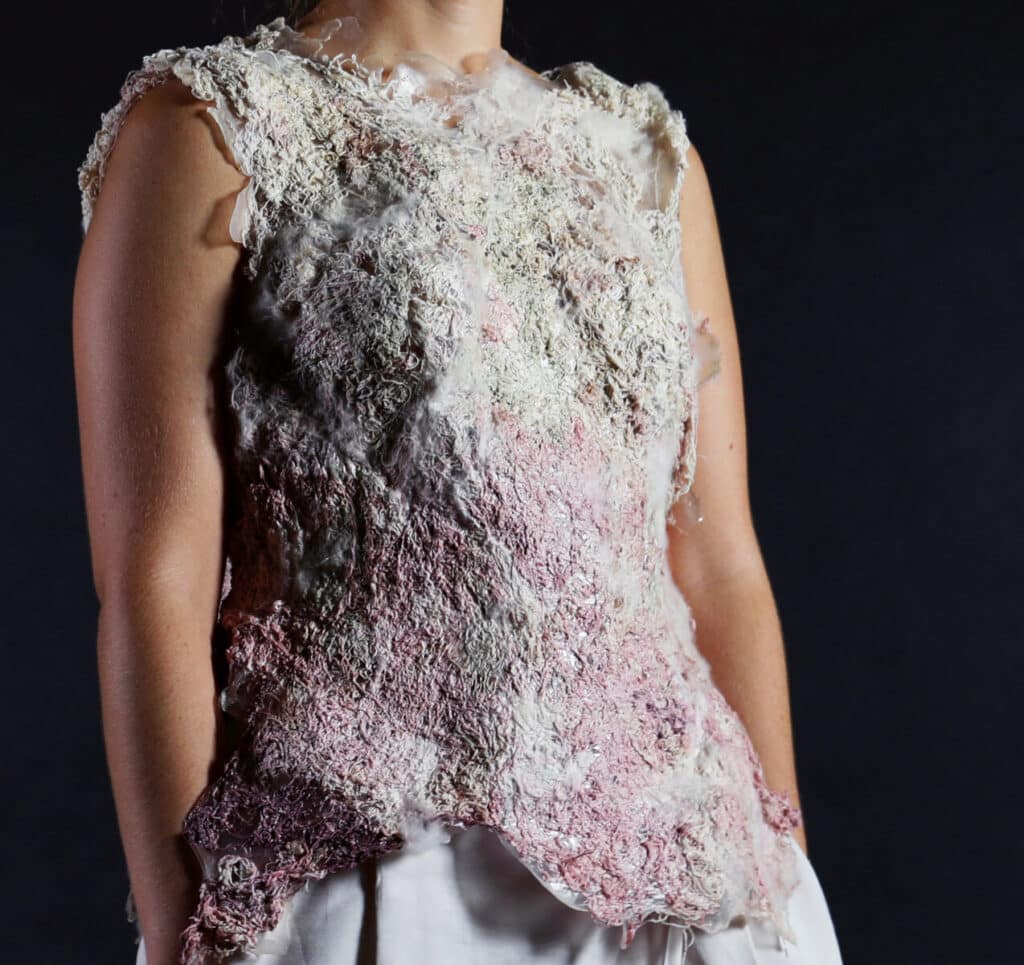
Crescendo A speculative design research project that envisions a future where fabric dyeing is obsolete due to pollution. Crescendo proposes a revolutionary method using genetically modified cotton seeds that grow pre-dyed fibers, eliminating stages like spinning and sewing. This approach yields color-rich fabrics using minimal resources and aims to make color accessible, sustainable, and co-created with nature. The project merges fashion with science to foster sustainable and regenerative methodologies. Project by Paola Chavero, Janvi Gohel, Elena Valdés & Mentors
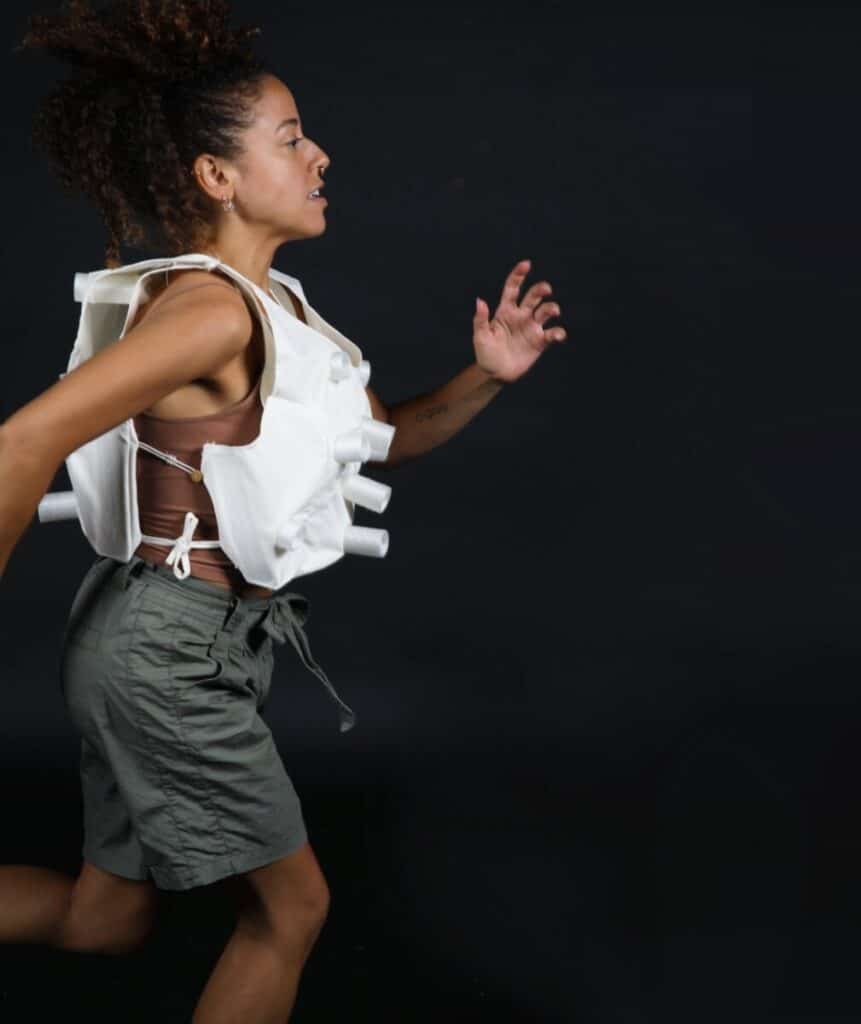
Aemula This project proposes a protective layer designed as a temporary shelter against dangerously high wet-bulb temperatures (exceeding 35°C), which are predicted to become common by 2180. Inspired by wind towers, Aemula features pipes filled with PEG-1000, a phase change material that activates at 35°C and helps cool the user by allowing wind to blow through the pipes. Project by Mariaclara Golfo, Annah-Ololade Sangosanya & Mentors

AIROSHELL. An open-source concept that transforms everyday clothing into walking air purifiers by applying Titanium Dioxide (TiO2) to knitted garments. It has a modular design allowing attachment to other capes to create shelter and increase the efficacy of the TiO2. AIROSHELL integrates Megamorph technology to communicate measured levels of CO2 and VOCs in the surrounding air through light patterns and color gradients. The open-source nature makes its applications and production boundless. Project by Florian Esser, Mirijam Mahle, Vivyan Zhang & Mentors
Climatique. This project conceptualises a garment designed to enhance skin temperature homeostasis and provide comfort in response to expected rising temperatures and increased heat stress by 2050. The garment is knitted for comfort and adaptability to various body types. It integrates MEGAMORPH technology to allow the garment’s color to change based on temperature input. Project by Virginia Ceruti, Candelaria Etcheverry, Elena Cerciello & Mentors


PuffAIR explores functional fashion for survival in the climate crisis era with a jacket inspired by organisms that harvest water and fog collection structures. It combines water collection technology (a knit created with a Kniterate machine using a shareable file) with Megamorph UV light-emitting screens and a water quality sensor. This garment allows the wearer to harvest, purify, test, and drink water directly from the air. A fan circulates air, condensing humidity into droplets collected in a pouch, while UV light sterilises components and the sensor monitors water quality. Project by Nico Garcia, Anna Cain, Julia Rodriguez & Mentors
Ataraxis. Designed for a future overwhelmed by noise, Ataraxis is a garment created to dampen noise, communicate emotions, and soothe anxiety. It covers the head and arms, incorporating fiber optics for lights and a heart rate monitor. The garment alerts the wearer via vibration if their heart rate is elevated and provides a timed breathing pattern to help calm them. It can also communicate feelings using selected colors or patterns. The project uses sustainable, noise-dampening wool. Project by Autumniin Kietponglert, Luis Alexandedr Alvarado, Paula Sánchez & Mentors

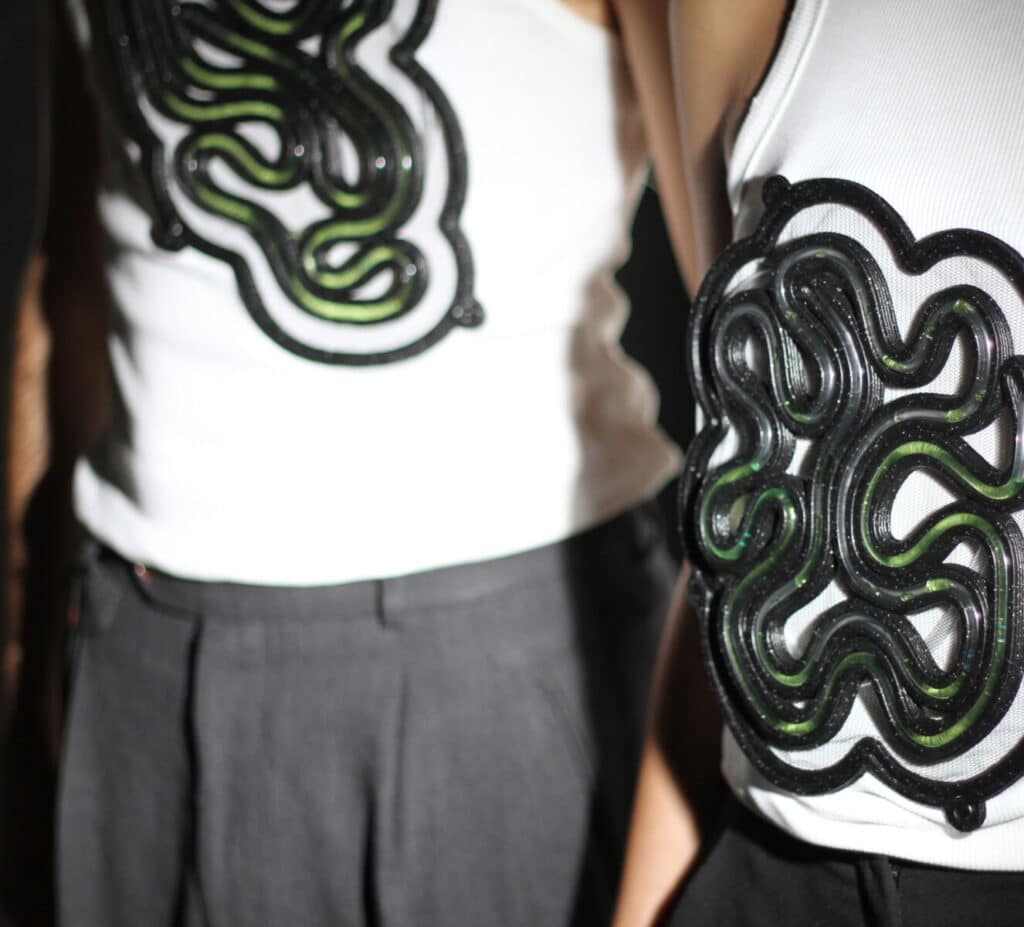
Aspira is a modular, 3D-printed intelligent device that can be placed on garments or accessories. It uses spirulina algae to filter air and water, feeding on polluted water or the wearer’s body fluid like sweat. Wearing multiple devices can contribute to reducing pollution, presented in a future context of severe urban pollution and lack of nature. Project by Eugenia Sananes, Jaiwen Gong, Sarah Rivera & Mentors
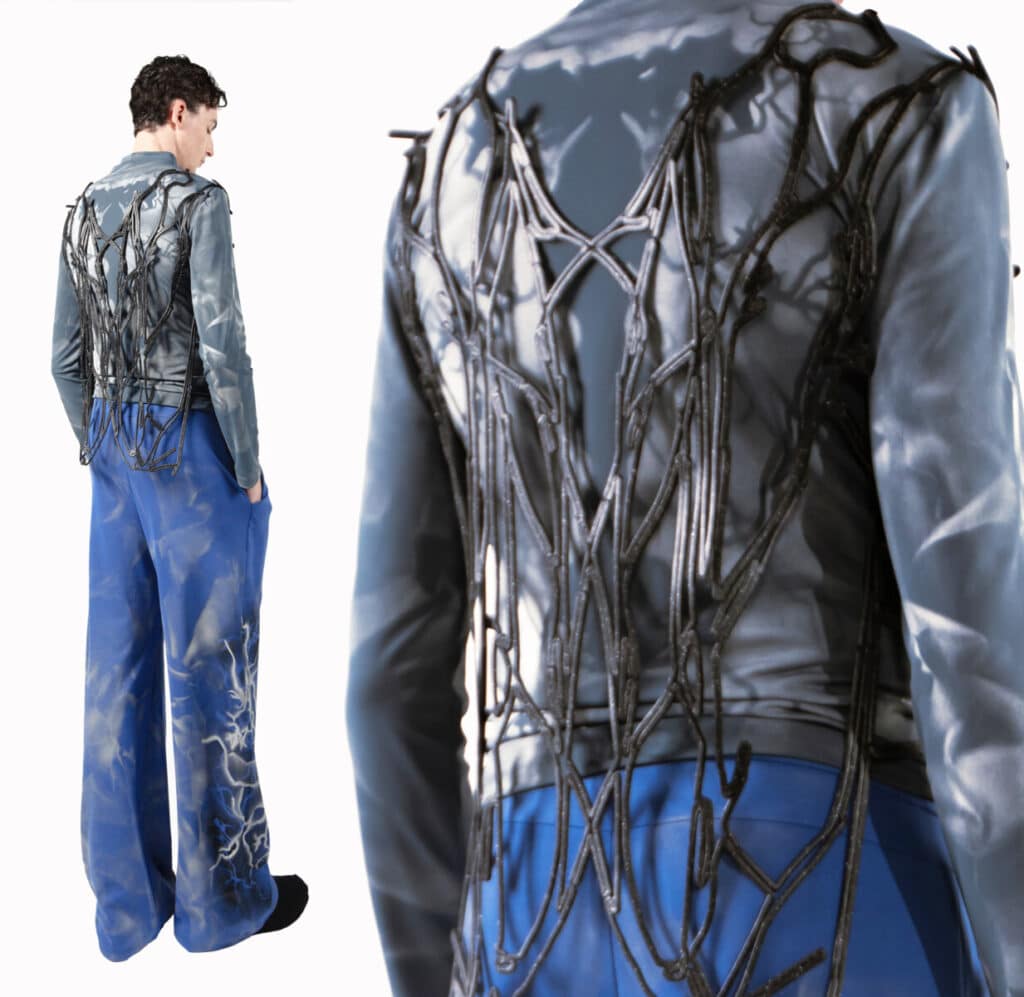
The Shortest Path. This project focuses on developing a garment to cool the body of farmworkers who face risks from rising temperatures impacting agriculture. The garment is created with 3D printing, and its structure is inspired by the efficient pathfinding of Physarum polycephalum using biomimicry. It includes a nano-tech ventilation system to help maintain a comfortable body temperature. No external link is provided in the sources for this project. Project by Joana Galli, Lola Loebel-Roson & Sita Zacherl & Mentors

Lila Suit The Lila Suit is a 3D-printed maternity garment designed for use in future extreme heat conditions. It aims to provide comfort and support, with a stomach area that expands as the pregnancy develops. The sides contain inflatable technology connected to an AHEAD sensor that measures the mother’s nutrients and the baby’s vital signs and heart rate. The suit uses cooling thermofibres and can also function as a nursing top. Project by Laura Cholewa, Leah Disney, Nasrin Mehralian & Mentors
Soilskin. This project aims to create renewable garments integrated with biotechnological components, inspired by those who might endure aridity in a post-earth future. The textile is a temperature-adaptable, sustainable wool-cotton blend designed as a carbon sink. The design includes 3D-printed elements representing desiccation cracks. It incorporates hardware with biosensing shoes that, upon detecting infertile soil, trigger the inflation of a silicone waistband. Stake sensors in the shoe monitor soil parameters (pH, light level, temperature, humidity, air temperature). The project involves a ritual of ripping and immersing fabric to stimulate ecological restoration and empathy. Project by Sofia Mazzucchelli Pompeu de Toledo, Xaneva Elorriaga George, Barbara Rakovská & Mentors