
Making in Commons: Rethinking Ecology, Craft, and Civic Imagination and reclaiming the Right to Manufacture
Key moments from the Making (in) Commons conference at Fab Lab Barcelona
Across Europe, the language of the commons has resurfaced as a framework for understanding how people organise, produce, and care for shared resources in a period marked by ecological instability and political uncertainty. Yet the commons is not a universal model; it is a constellation of situated practices shaped by cultural histories, social infrastructures, and collective agency. The recent Making (in) Commons conference, hosted at Fab Lab Barcelona/IAAC as part of the Barcelona Design Week 2025 themed “creative resilience”, approached this complexity directly, examining how distributed design, local production, and civic infrastructures might support more democratic and resilient urban futures.
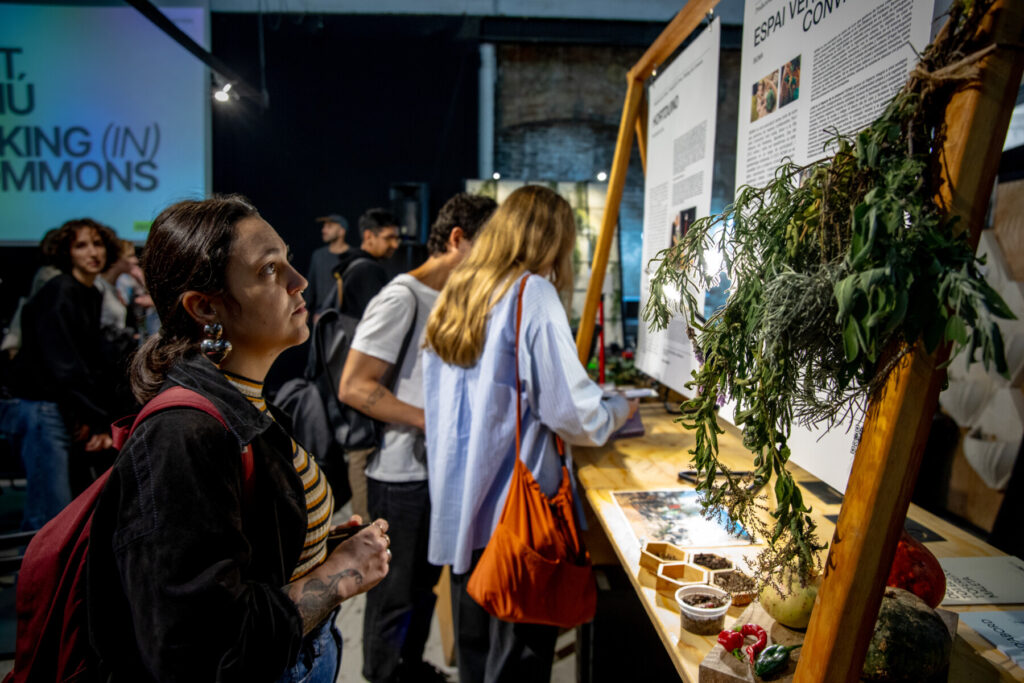
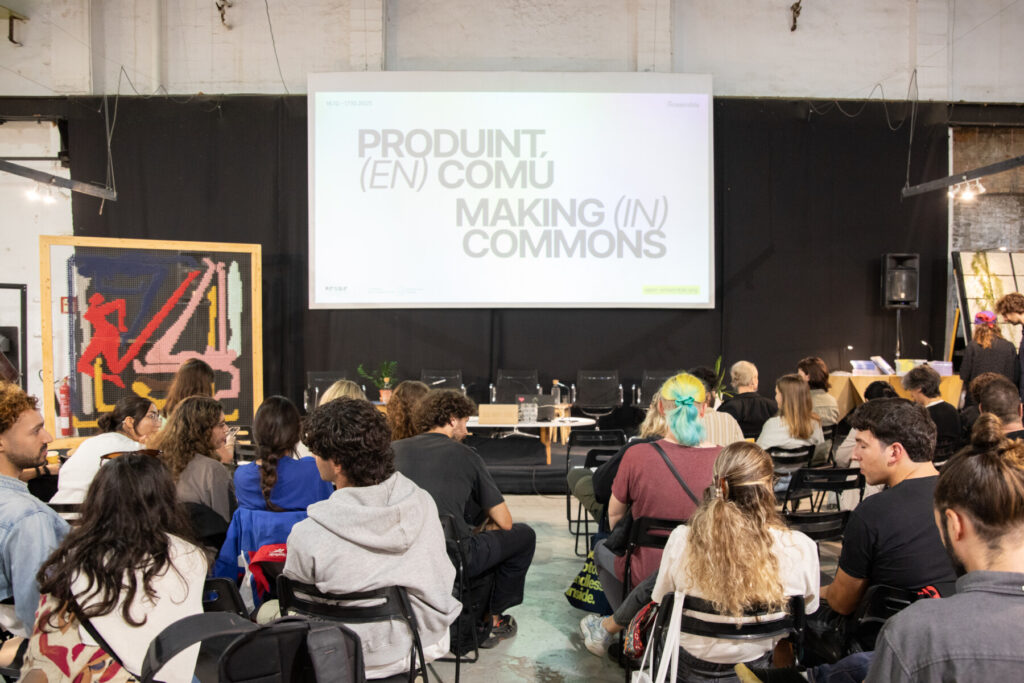
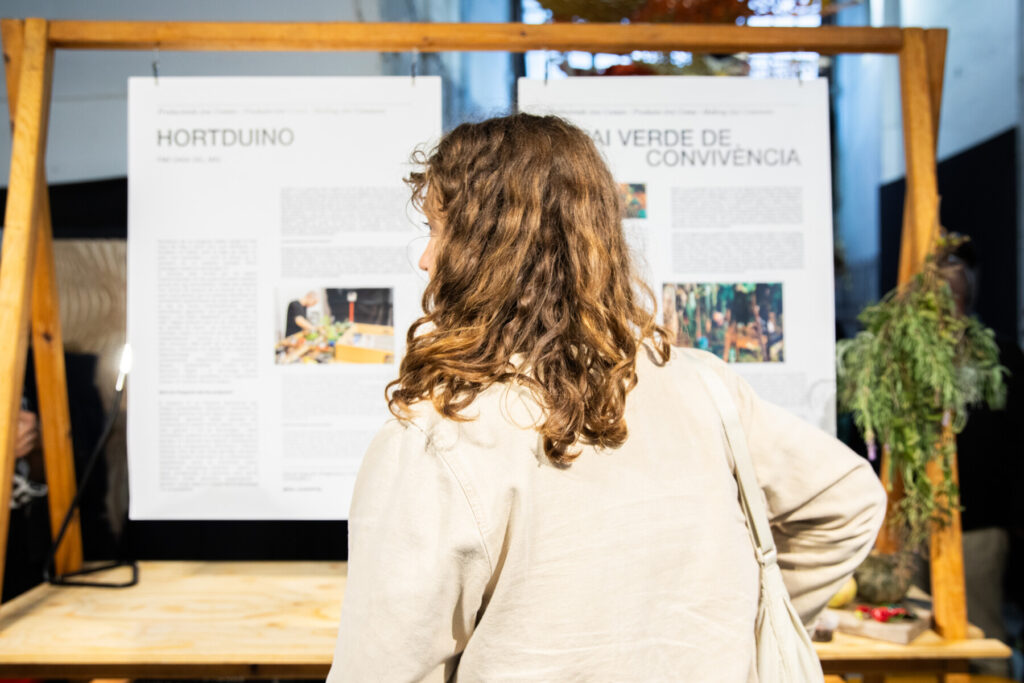
Grounded in principles of cooperation, shared ownership, and mutual care, the conference convened makers, researchers, cultural practitioners, and policymakers from Barcelona and across Europe. Rather than treating the commons as an abstract ideal, contributors focused on how it materialises in everyday practice—through neighbourhood workshops, municipal fabrication labs, circular initiatives, public land used for production, the right to repair, and creative work undertaken in precarious conditions. These practices sit within a broader geopolitical moment in which cities and their peripheries are re-examining questions of production: how local manufacturing, craft revitalisation, the democratisation of making, and distributed technologies might support more just and holistic transitions amid overlapping social and environmental crises.
The programme unfolded across two interconnected scales. Internationally, the Distributed Design Platform offered a transnational perspective on open, collaborative, and decentralised forms of design and production. Locally, the newly launched ENSEMBLE Network brought together more than twenty creative and productive spaces from the metropolitan area to publicly share their stories, challenges, and collective ambitions for the coming years.
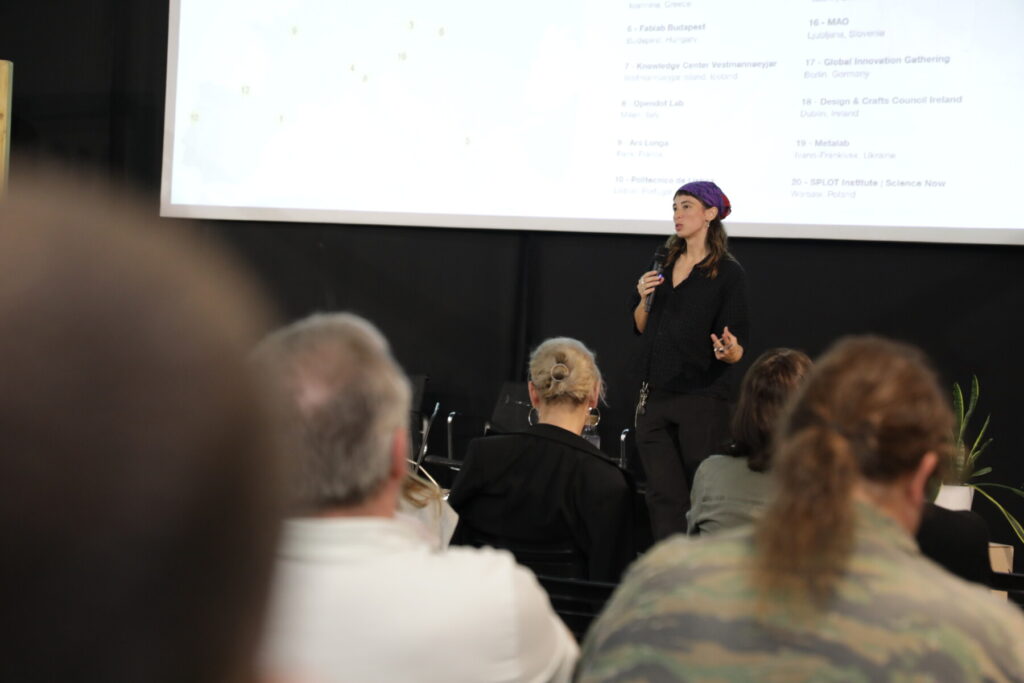
Design Grounded in Care
Since 2017, the Distributed Design Platform has cultivated a culture of open knowledge-sharing, developing tools and methods that challenge centralised and extractive industrial logics. Over nearly a decade, the platform, guided by the strategic direction of Guillem Camprodon (Director of Fab Lab Barcelona), and shaped throughout the coordination leadership of Jessica Guy, who has stewarded the growth of the Distributed Design Platform, has supported more than 2,000 creatives worldwide through capacity-building activities, peer exchange, and opportunities to reimagine design beyond linear production paradigms. These reflections were examined in greater depth in the Platform’s 2025 Impact Report. For the conference, six members of the Distributed Design community were invited to share their perspectives: Vincent Guimas (Ars Longa, France); Agnese Gualandi and Andrea Ascani (Opendot, Italy); Michel Langhammer (New Production Institute, Germany); Anja Zorko (Centre for Creativity at the Museum of Design and Architecture, Slovenia); and Laura Baumann (European Crafts Alliance).
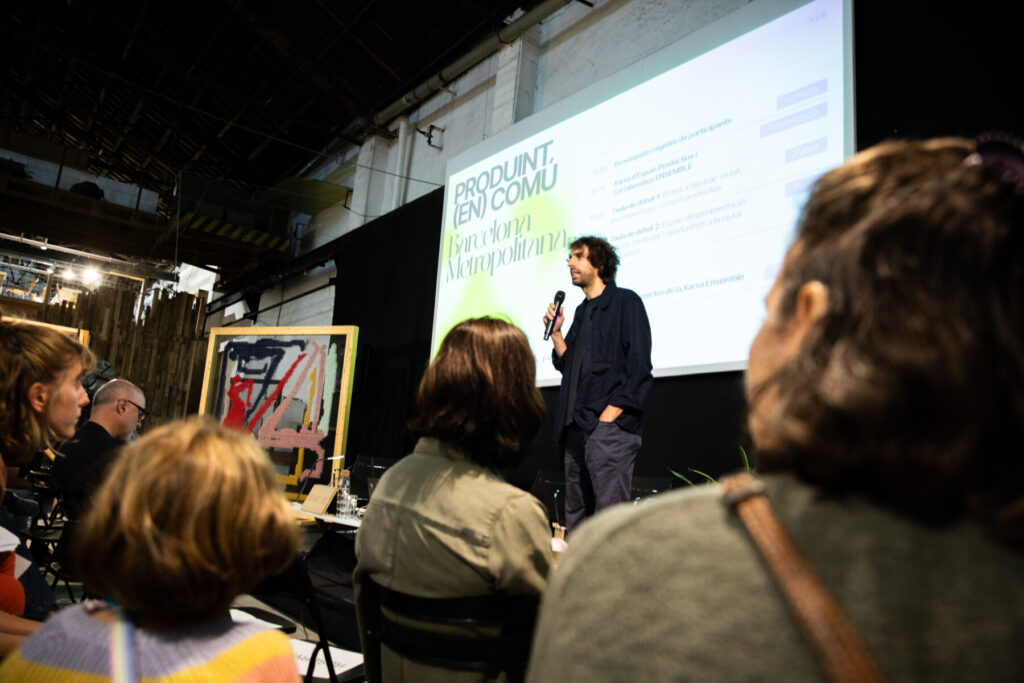
Creative Empowerment, Resilience and Democracy
In his presentation, Vincent Guimas explored the role of culture in shaping ecological futures. Drawing on the European-funded PENCE project, he described how artistic practice, shared narratives, and civic agency can support ecological transformation across local contexts. Working across four countries, PENCE builds infrastructures for citizen engagement, interspecies storytelling, and situated ecological knowledge—countering the politicisation of environmental action by foregrounding grounded, participatory cultural work. Vincent urged participants to resist political despair and remain attentive to creative agency, arguing that design and cultural production are forms of civic participation essential to sustaining democratic life.

Building digitally connected Infrastructures
Shifting from cultural narratives to material conditions, Michel Langhammer examined the tools, machines, and operational systems that underpin creative production. He encouraged a critical assessment of the infrastructures required for genuine ecological transition—particularly the need to measure and understand the environmental impacts of fabrication processes. Presenting the LAUDS project, which focuses on accessible urban manufacturing, he shared ongoing work to develop tools for monitoring energy use in fabrication spaces and supporting small-scale, replicable models of micro-manufacturing. His statement, “We’re not only making objects—we’re building conditions for collaboration,” resonated strongly across the room and provided a conceptual bridge to the subsequent presentation on make-a-thek.
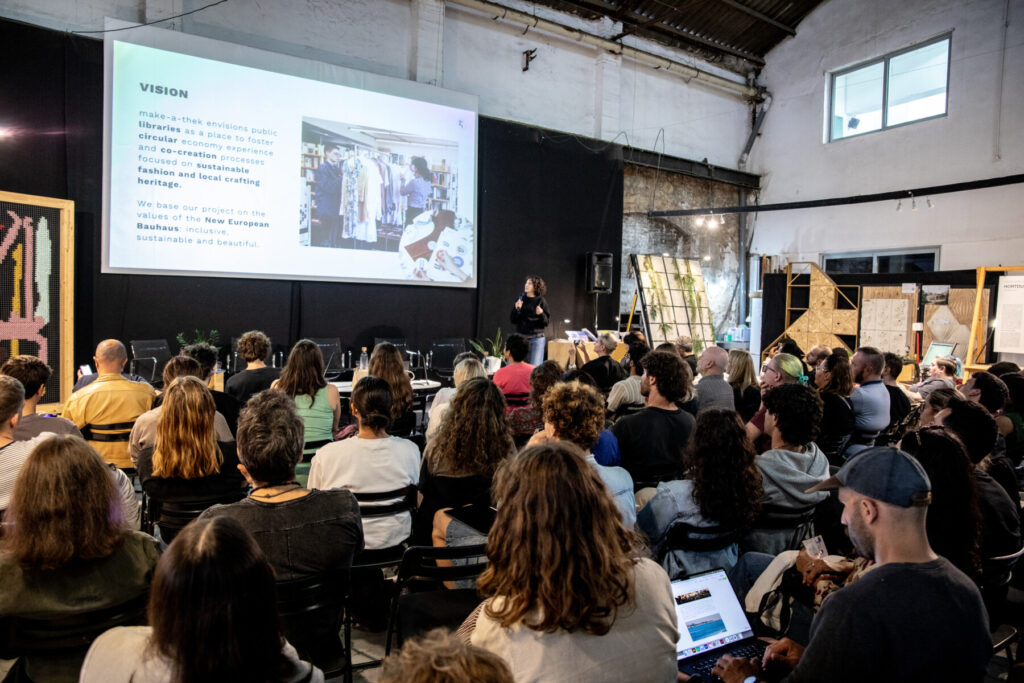
Make-a-thek: Libraries as Circular Makerspaces
Make-a-thek, an EU-funded project, brings modular, replicable makerspaces into public libraries. Centred on fashion and craft, these spaces invite communities to engage with circular and experimental approaches to making within institutions already embedded in public life. Through co-design processes with librarians and creative practitioners, the project develops an approach for culturally attuned makerspaces that reflect the social and material contexts of each site. A make-a-thek manifesto is currently being developed, extending and contextualising New European Bauhaus values through the lived experiences of the project participants.
“The library is already a commons—our job is to extend that into making, learning, and circularity.”
Within the project, Opendot leads the development of a digital toolkit that synthesises insights from the co-design sessions into practical resources, case studies, and methodologies for libraries seeking to establish or strengthen their circular makerspaces. In 2026, Fab Lab Barcelona will introduce a “training the trainers” programme to ensure that each library is connected to local creative networks and supported by a capable team equipped to sustain and adapt the makerspace over time.
Craft as Cultural Connector
The panel discussion “Commons of Practice: Connecting Communities through Materials and Space,” moderated by Olga Trevisan brought together Laura Baumann (European Crafts Alliance, Brussels), Anja Zorko (Centre for Creativity, Ljubljana), and Andrea Ascani (Opendot, Milan). The conversation examined how craft operates as a cultural connector—carrying ecological and tacit knowledge, supporting intergenerational learning, and sustaining community identity. Framed through the lens of shared and collective making, the invited guests reflected on practices operating at different scales: from materials to people, in which practices sustain and support cultural traditions, while fostering connections across communities, from local workshops to European networks. The discussion moved from tangible making practices to broader questions of scale, impact, and calls-to-action, positioning craft not as a nostalgic artefact but as a living methodology that grounds digital innovation within specific cultural and material histories.
“Craft is not the opposite of digital—it is the ground from which digital practices can become meaningful.”


A fitting close to the conference segment on Distributed Design practices came through the presentation of the Driving Design Trilogy. Julia Bertolaso, a member of Fab Lab Barcelona’s and part of the publication’s design and curatorial team, introduced the trilogy, which represents the three most recent volumes in a series that has documented seven years of annual publishing. The trilogy traces the expanding role of design in shaping more just and regenerative futures, highlighting the interplay between cultural, social, and political contexts.
Curated in close collaboration with the Distributed Design community, the series is underpinned by yearly open calls, offering contributors the opportunity to publish without financial barriers. In this way, the books amplify the voices of practitioners worldwide, foregrounding critical reflections, experimental practices, and novel forms of collaboration. Julia framed the discussion with questions that resonate throughout the series, starting off with questioning what happens when design stops being something a few people do, and becomes something that is shaped together. Through examples drawn from the last three editions, the presentation illuminated how the community engages with urgent, pressing challenges and reimagines the role of design as a collective, socially embedded practice.


Introducing ENSEMBLE: A Network of Urban Production
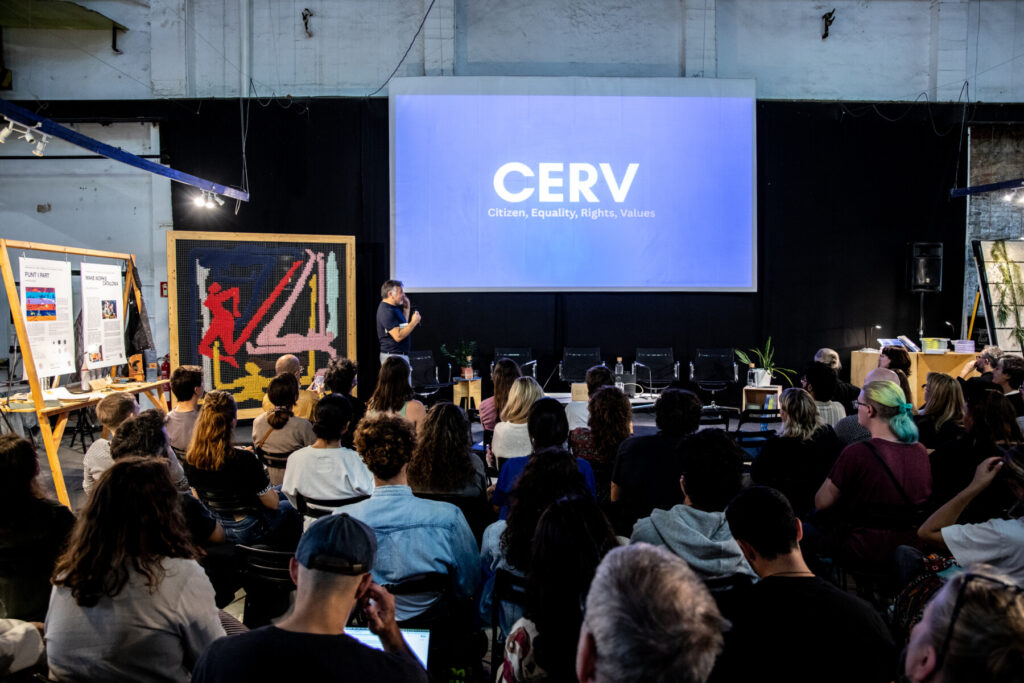
If the international dimension emphasised distributed infrastructures across Europe and beyond, the local programme focused on the ENSEMBLE Network of Productive and Collaborative Spaces in Barcelona and its Metropolitan area. ENSEMBLE brings together Fab Labs, ateneus, makerspaces, microfactories, craft centres, industrial coworkings, and other hybrid spaces attempting to define what it means to “produce in the city” today. Born from two and a half years of itinerant meetings, collective reflection, and shared frustrations, the network reflects a desire for visibility, coordination, and political recognition.
The Produint (en) Comú programme was introduced by Guillem Camprodon, Director of Fab Lab Barcelona, emphasising the importance of strengthening local ties to activate the city’s diverse ecosystem of production spaces. Camprodon reminded the audience that Barcelona’s landscape of productive spaces is the result of long-standing individual and collective efforts, as well as public-sector investments—such as the launch of the Ateneus de Fabricació more than a decade ago.
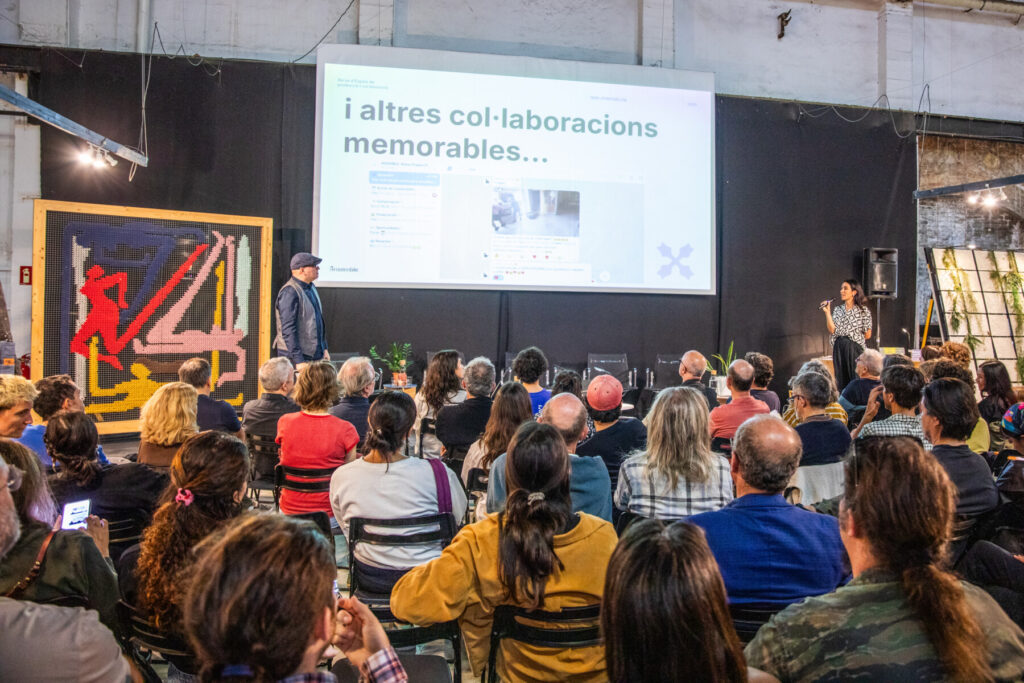
Following Guillem’s opening remarks, Milena Juarez from Fab Lab Barcelona conveyed that ENSEMBLE emerged from a shared need “to recognize each other, share resources and knowledge, and collaborate across the city’s maker and manufacturing ecosystem.” She highlighted that the network is not only about producing locally but also about fostering collective learning, connecting people and organizations, and cultivating a collaborative culture around urban production. The network’s origins were traced to a 2023 roundtable with representatives from multiple creative and production spaces, a meeting that sparked the idea of building shared goals, co-creating an identity, and establishing an open Manifesto. ENSEMBLE has grown to include 30–35 entities, covering more than 20,000 square meters of collaborative spaces, with an active communication channel facilitating knowledge exchange, resource sharing, and collaboration. The accompanying demo-exhibition showcased prototypes from members, offering a tangible view of the network’s collaborative innovation and fostering dialogue among participants.


“We wanted a name that could hold coordinated diversity—like instruments playing together.”
The network’s name and identity were then presented by Oscar Martínez Ciuró, from Maker Convent, highlighting how “Ensemble” was chosen to evoke the idea of diverse elements working together, like instruments in an orchestra, creating harmony through coordination. The visual identity, with organic forms radiating outward like waves, symbolizes the network’s reach and impact across the city. Collaborative workshops have become a hallmark of ENSEMBLE, promoting skill-sharing and resource redistribution, including the revitalization of obsolete machinery for new projects. Beyond aesthetics and collaboration, the network provides practical support for members, including facilitating funding opportunities, meeting technical needs, and offering pathways for job opportunities.
Two roundtables framed ENSEMBLE’s public launch:
- The Right to Manufacture explored access to urban production, industrial heritage, and the role of repair and circularity in urban policy.
- Spaces of Experimentation positioned makerspaces as civic laboratories advancing gender equity, youth engagement, climate action, and community self-determination.
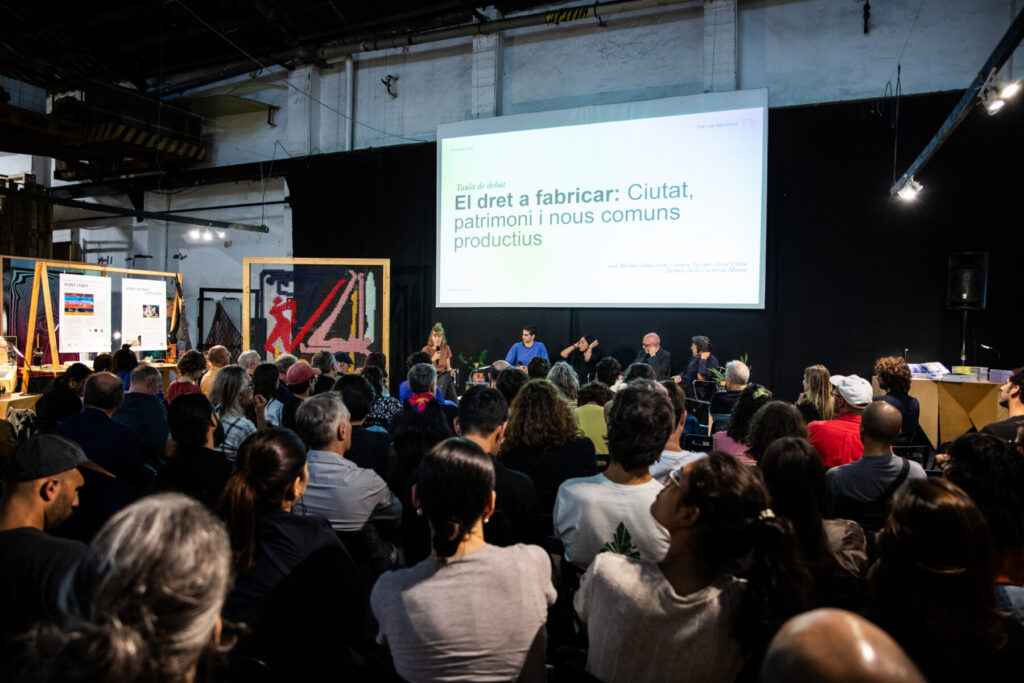
The Right to Manufacture: City, Heritage, and New Productive Commons
The first panel, “The Right to Manufacture: City, Heritage, and New Productive Commons”, explored how urban production can be integrated into the city while balancing heritage, innovation, and social inclusion. The roundtable was modered by Clara Borràs (UAB Open Labs), and the participation of Michael Donaldson (Fundació BIT Habitat), Jordi Carmona Maura (TMDC), Carmen Tanaka (Akasha Hub Barcelona) and Oriol Estela Barnet (PEMB – Pla Estratègic Metropolità de Barcelona ).
Clara Borràs opened the conversation by naming the central tension: How do we access space for production in a city under intense real-estate pressure? And more importantly, how do we protect, reproduce, and expand the ecosystems that make local innovation possible?
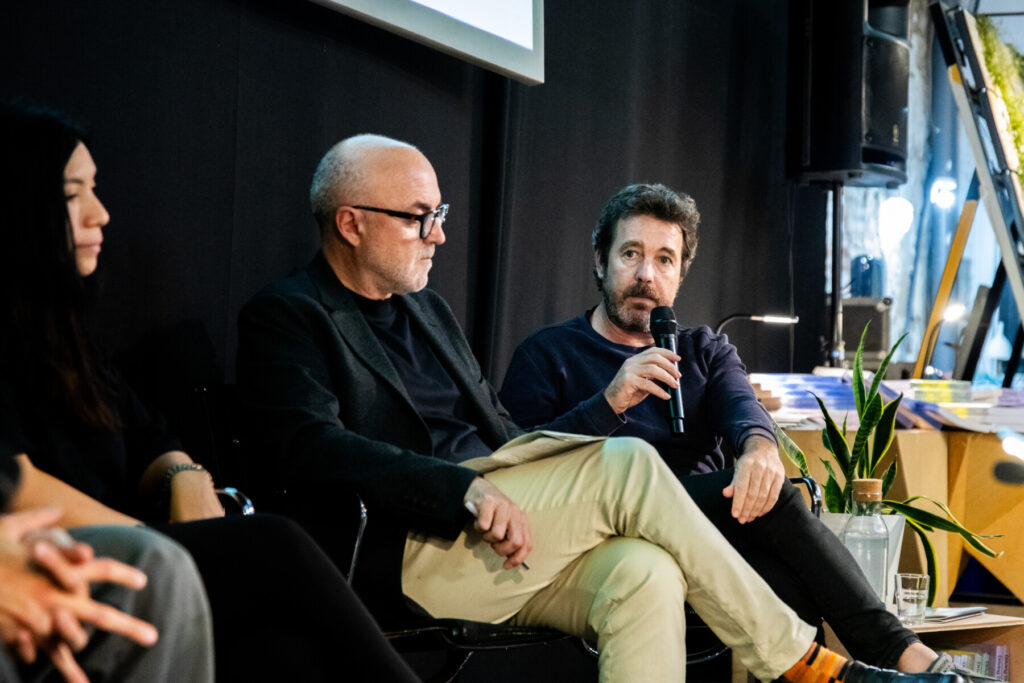
Michael Donaldson, general director of Fundació BIT Habitat, spoke with clarity about the dual role of public administration: not only to do—to provide services, infrastructures, and spaces—but also “to enable others to do”. The Ateneus de Fabricació exemplify this role. He highlighted how these spaces offer pathways from ideas to prototypes to public services, supported by a strong pedagogical programme for schools. Technology, he reminded us, must remain a means, not an end. His conclusion was unambiguous: structural challenges cannot be solved by administration alone—they require publicly enabled ecosystems of local production.
“A city that only consumes and does not produce is not resilient.”
Jordi Carmona Maura, coordinator of the workshop of TMDC, shared how they are currently weathering a transition into a new space—a moment described as “exciting and tough.” Demolition of industrial buildings has eroded Barcelona’s productive capacity, particularly for large-scale fabrication such as WikiHousing. TMDC’s vision is straightforward yet political: to manufacture with dignity in the city. This means high-quality machinery, proper technical conditions, and the social infrastructure that supports collaboration. It means enabling freelancers and small companies to pursue ambitious projects without “mortgaging themselves just to try.”
“We’re not just a factory—we’re a place where people can start without fear.”
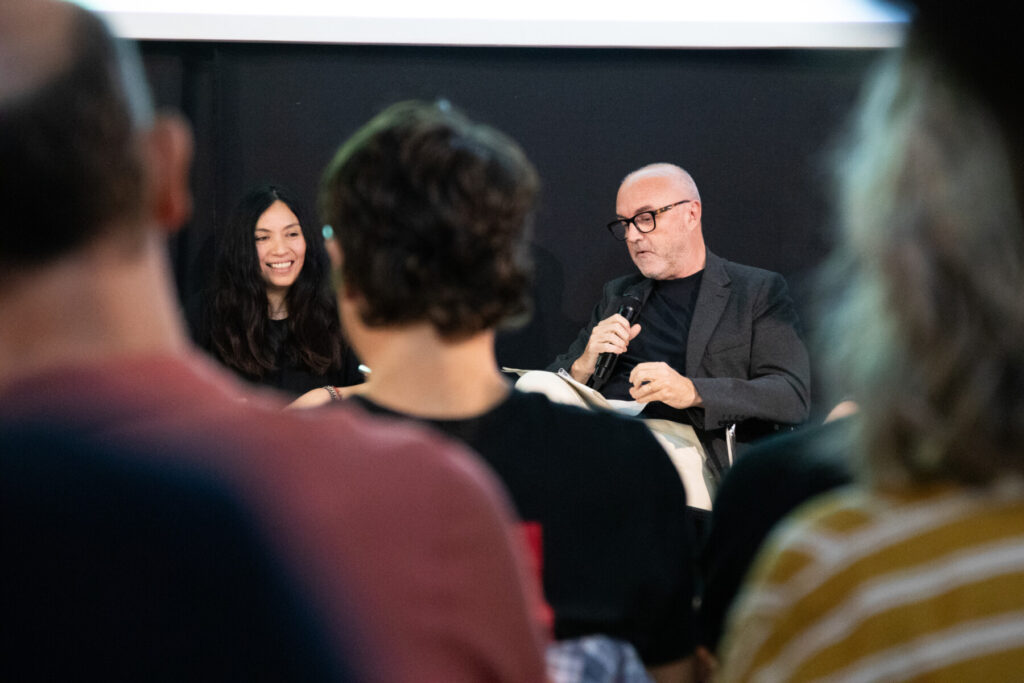
Akasha Hub celebrates its eighth anniversary this winter—a milestone built on experimentation with new forms of civic governance. Originally an open, fee-free space, Akasha has shifted toward a more structured, sociocratic model with clear roles, coordination mechanisms, and a commitment to self-financing—maintaining independence by avoiding reliance on public funding. Carmen Tanaka, coordinator of Akasha Hub Barcelona, explained that agility and resilience are foundation to the space, reflected in its modular furniture, mobile infrastructure, constant awareness of urban transformations, and deep ties to the neighbourhood.
“Belonging is not only the physical space—it’s the vision we share.”
Oriol Estela Barnet, general coordinator of PEMB, called for the integration of such ecosystems into mainstream economic development strategies—not as exceptions or pilot projects, but as a metropolitan norm. He emphasised PEMB’s role in creating frameworks for pilot tests that can later be scaled into ordinances or metropolitan policies.
“To transform the city, we must move from isolated experiments to structural frameworks.”
Experimentation Spaces: Culture, Creativity, and Opportunities in the Productive City
The second panel, moderated by Belén Fernández (Ludic3) focused on “Experimentation Spaces: Culture, Creativity, and Opportunities in the Productive City”, focused on the diversity and potential of experimentation spaces. The panel was made of Sergi Botella (Fundació AAVC Hangar), Anam Stubbington (Makers Zone BCN), Ricard Gómez (Espai Maker – Fab Casa del Mig) and Ana Vivero (Tornem les Esquelles).

Hangar—founded by artists nearly three decades ago—remains one of Barcelona’s most vital laboratories of artistic research. Sergi Botella, the actual director, emphasised the lab’s commitment not only to emerging technologies but to the ethics and relationalities that accompany them. Cycles such as AIAI explore toxicities, human–machine relations, and new critical lenses. The famously open Thursdays continue to sustain knowledge exchange and interdependence.
“It’s not just about technology, but our relationship with it.”
Fab Casa del Mig inherits several strengths from the civic centre model, including quarterly programming that sustains ongoing dialogue with the neighbourhood and a stable annual budget that enables long-term planning and consistent support for local associations. Building on this foundation, the team has introduced new forms of everyday participation: self-managed Wednesdays in which citizens organise activities and use the machines autonomously; non-mixed Tuesdays designed to counter persistent gender imbalances; and Youth Maker Thursdays for 12–16-year-olds, creating continuity between school-age engagement and adolescent creative practice. Together, these approaches work towards a broader ambition: to normalise making spaces within the city so they become part of everyday civic life rather than isolated exceptions.
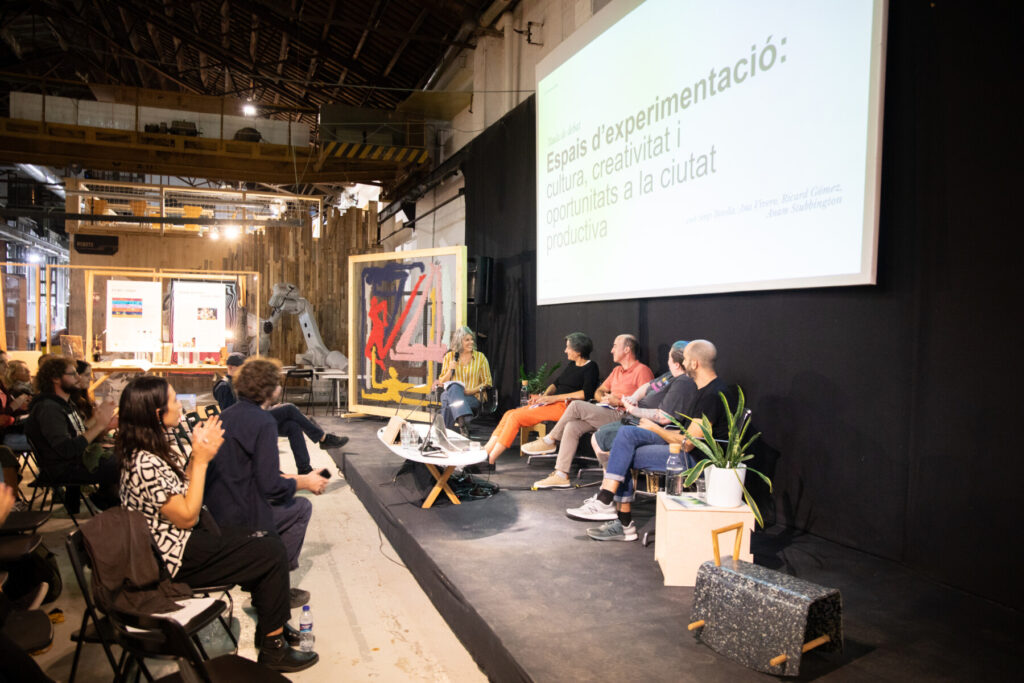
Tornem les Esquelles, represented by Ana Vivero, the artistic directors and one of the founders, is a collective of six women working in Collserola since 2021, reviving the value of wool from local herds and ensuring shepherds are paid fairly. The territory itself is their workshop, but this brings challenges: water access, the disappearance of industrial processes like wool washing in Barcelona, and complex licensing systems. Their circular system ensures nothing is wasted—wool remnants become garden material—and their vision looks toward building a small processing factory in Catalonia, rooted in anti-capitalist practice and ecological care.
“Shepherds don’t just raise animals—they prevent fires and maintain the land.”
Anam, the president of the Makers Zone BCN, underscored the importance of providing young people with sustained opportunities to experiment, prototype and develop projects across all stages of education, – from early childhood extracurriculars to university labs, artist spaces like Hangar, all the way to independent practice – highlighting that designing for the future requires both space and time. She emphasizes the need for more supportive environments where children can explore ideas, receive guidance, and understand that “they can do anything” while benefiting from continuous learning opportunities and mentorship that foster creative and confident engagement with making and design.
“We must let go of the cult of immediate perfection. Learning happens by doing.”
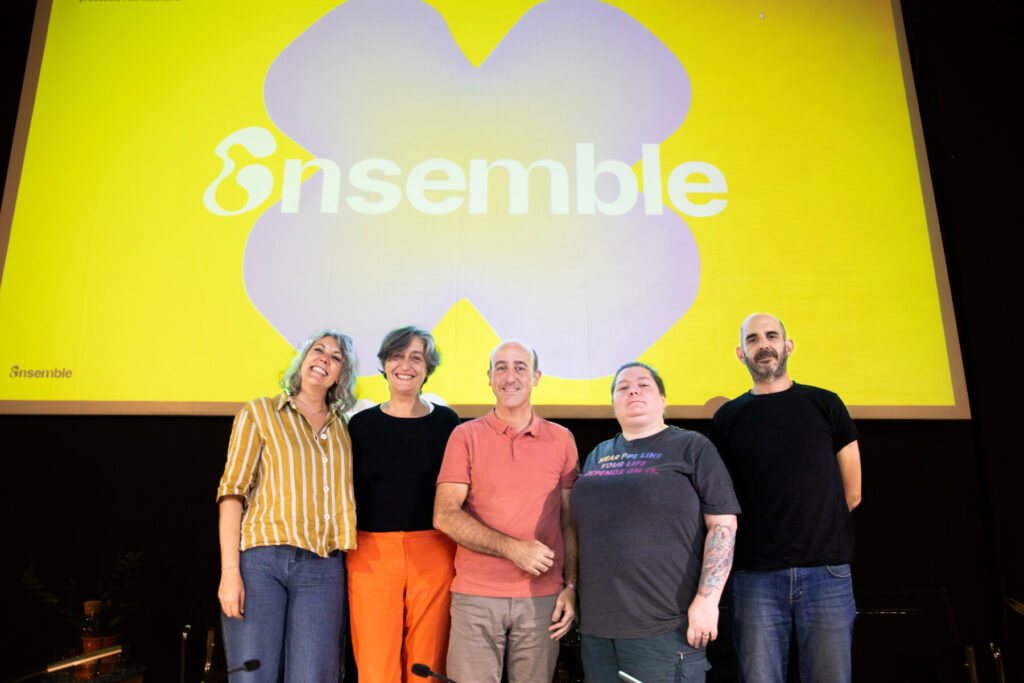
Across both roundtables, a shared narrative emerged: that cities must protect and expand their productive capacity—not simply for economic resilience, but for cultural vitality, community autonomy, and ecological responsibility. These discussions pointed towards production as a public concern, shaped by governance, care, and long-term commitment rather than short-term efficiency. In this context, Fab Lab Barcelona staff member Jessica Guy offered a closing reflection: “The right to manufacture, the right to experiment, and the right to organise collectively are intertwined. What’s needed now is sustained commitment—from policymakers, from civil society, from educators, from urban communities—to ensure that these fragile, powerful ecosystems not only survive, but flourish.”


Taken together, the discussions in Barcelona revealed a movement that is both dispersed and deeply grounded. Its strength lies not in unified doctrine but in the patient, situated work of those maintaining workshops, negotiating with municipalities, nurturing local materials, and holding communities together amid accelerating urban and ecological pressures. What emerged was less a conclusion than a shared orientation: that the ecological transition will depend on infrastructures of care, places for experimentation, and cultural narratives capable of sustaining collective imagination. Making in commons, in this sense, is not a slogan but a practice—relational, provisional, and tied to the specificities of place. It invites us to reconsider how cities might host production as a public good, how governance can support shared stewardship, and how everyday acts of making might contribute to more just and regenerative futures.
Written by Milena Juarez and Jessica Guy, with contributions from Julia Bertolaso and Olga Trevisan.
Follow Xarxa Ensemble…
Follow Distributed Design…