Regenerative Futures at COP30: A Shared Approach in the Brazilian Amazon
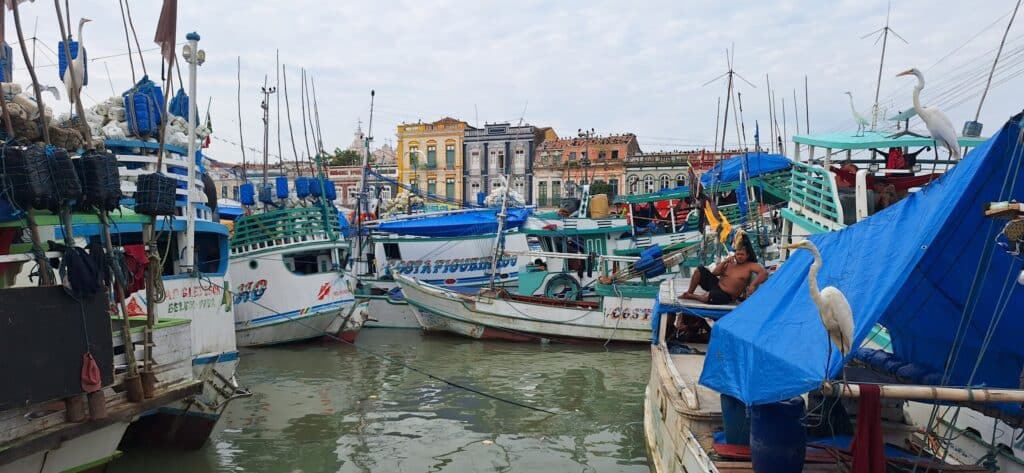
At the 2025 United Nations Climate Change Conference (COP30) in Belém do Pará – Brazil, Fab Lab Barcelona at IAAC joins forces with CESUPA – Centro Universitário do Estado do Pará, and TREBEA, a Brazil-based consultancy in sustainable development to advance a shared vision: supporting the transition of Amazon into a productive and regenerative territory. Throughout COP30, the partners will explore new collaborations, identify potential allies, map relevant initiatives, and promote knowledge exchange to strengthen participatory innovation, broaden the use of open technologies, and boost the sociobioeconomy’s potential for local impact and scaling.
Context and Purpose
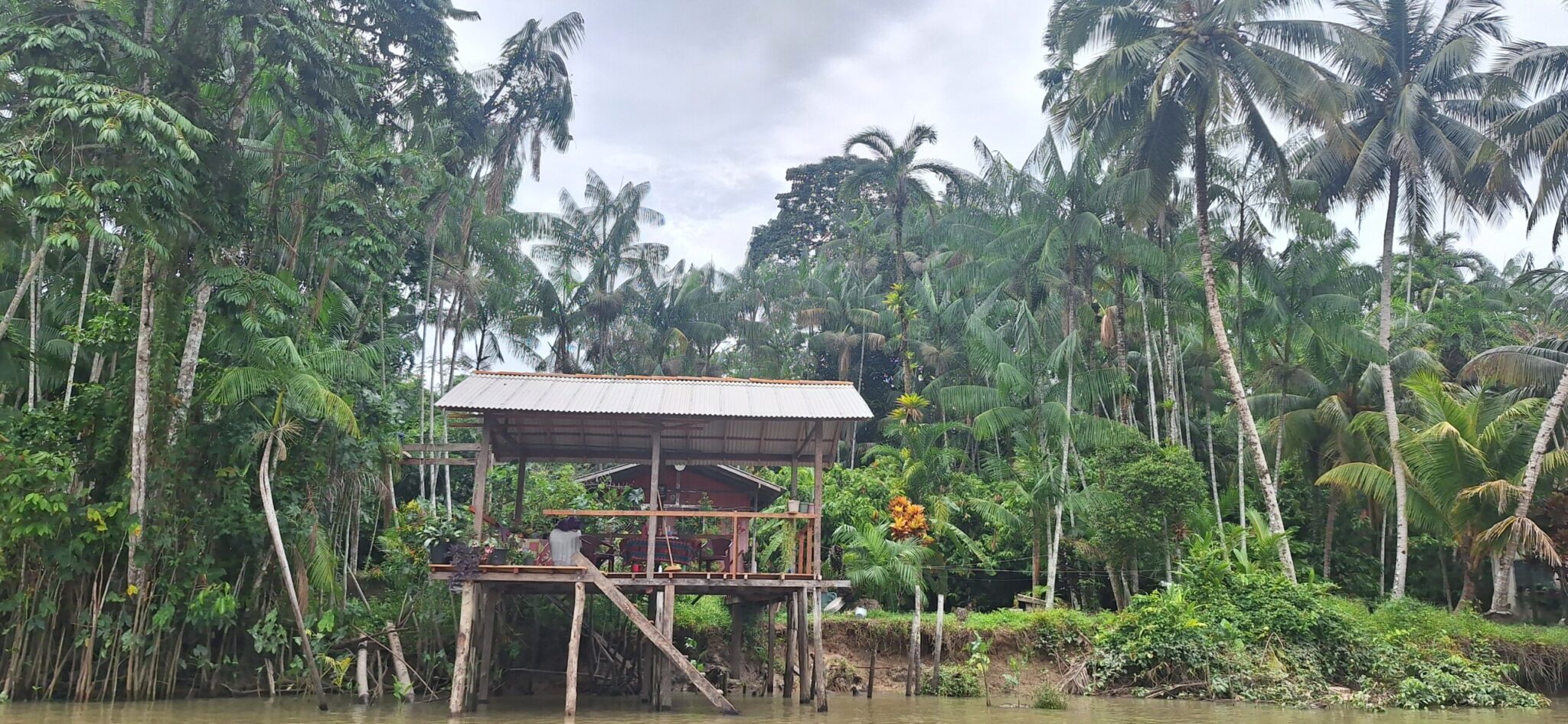
The Amazon stands today as both a global ecological commons and a site of contested development. Amid accelerating deforestation, extractive industries, and social inequality, the region also embodies a unique opportunity to redefine how we relate to nature, technology, and production.
In this context, the Brazilian government has positioned the sociobioeconomy as a strategic pathway for sustainable developent and production (Read more about: Climate and Policy Initiative article G20 Brazil article), linking economic growth and environmental conservation through national strategies, institutional reforms, and financial incentives. This emerging concept of healthy standing forests and flowing rivers in the Amazon prioritizes the well-being of people and environmental conservation (Garrett, Ferreira et al., 2023). This vision promotes the integration of science, technology, innovation, and the knowledge of Indigenous Peoples and local communities to address the real needs of local populations (Baniwa et al., 2023; COICA, 2025), thereby supporting equitable participation in value chains and reinforcing territorial resilience.
Aligned with this agenda, the maker movement and Fab Labs can act as platforms for innovation and collaboration, democratizing access to technology and nurturing community-driven enterprises, products, and services. By supporting the development of diverse bioproduct chains, forest-based communities can generate sustainable incomes while maintaining their cultural integrity and leadership. Expanding the bioeconomy, therefore, means not only increasing production but empowering local actors to innovate in products, processes, and social technologies -something that resonates deeply with the Fab Lab movement: a network of distributed spaces dedicated to building skills and knowledge, fostering community involvement, and driving innovation through open technology.
Our collaboration responds to this urgency by positioning distributed innovation infrastructures, such as Fab Labs, community workshops, and open knowledge platforms, as enablers of locally grounded, globally connected transformation, supporting research and development of technologies for regenerative forest economies, as well as technical and leadership capacity building, and participatory design methods.
This partnership is rooted in the legacy of the Institute for Advanced Architecture of Catalonia (IAAC), a pioneering institution established in 2003 to explore how technology, ecology, and architecture could converge to shape new urban paradigms. From its origins in Barcelona, IAAC has consistently bridged global research and local experimentation. Its approach to advanced architecture has evolved from designing buildings to designing systems, infrastructures, and communities capable of learning and adapting.
A Shared Approach
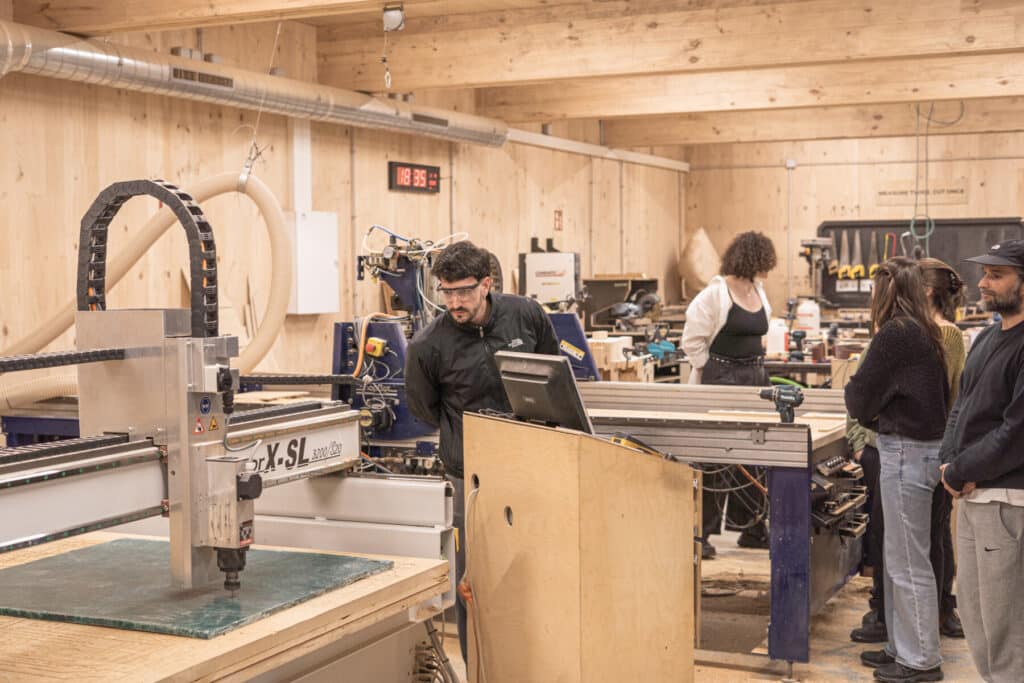
As one of the earliest and most active nodes of the MIT-originated Fab Lab Network, Fab Lab Barcelona has played a central role in expanding the concept of fabrication laboratories worldwide, from tools for digital literacy to engines of industry 4.0, bio based solutions, and environmental sensing. Today, the global Fab Lab ecosystem counts over 3,000 labs, many inspired by Barcelona’s model of civic innovation and its commitment to open, distributed design
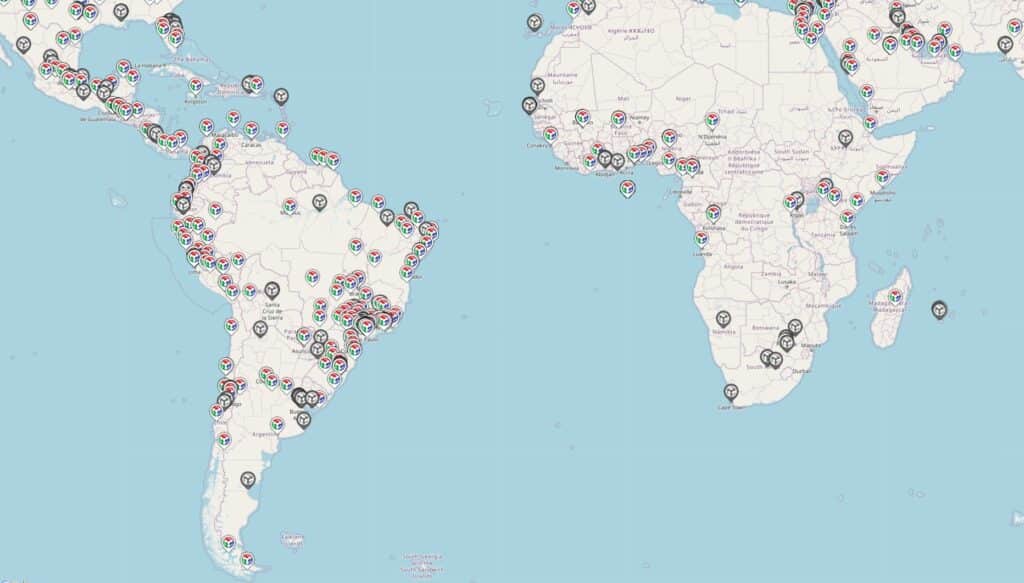
Map of Fab Labs worldwide (fablabs.io, 2025)
Through initiatives such as the Prototyping Labs programme, Fab Lab Barcelona has developed methodologies that link digital fabrication, circular design, and distributed manufacturing to new forms of urban and territorial regeneration. These approaches emphasise learning-by-making, local production, and commons-based innovation as strategies for climate adaptation and resilience. Over the past decade, Barcelona itself has served as a test bed for productive cities, a place where digital infrastructures meet citizen participation to reimagine how cities produce what they consume.
TREBEA as a strategic hub for integrated impact, brings deep expertise in sustainability, socio-environmental management and advocacy. It bridges technical excellence, and collaborative processes to co-create systemic solutions adapted to complex Latin American contexts. Its work focuses on developing sustainability strategies, facilitating complex processes, and building collaborative governance models that engage diverse stakeholders. Together, we aim to connect multistakeholder dialogue with tangible, place-based action, bridging the gap between global frameworks and local capabilities.
CESUPA (Centro Universitário do Estado do Pará) plays a key role in fostering regenerative practices in the educational and innovation sector of Pará state. Through its diverse academic programs, including Architecture and Urbanism, and a strong network of partners, it integrates design, technology, and local knowledge into education and research. Projects like Florestas Inteligentes (watch the documentary of edition 2024 below by CESUPA) and Amazon Hacking connect students, forest communities, and private partners to co-create solutions for bioeconomy challenges, clean water access, and biodiversity conservation in areas near Belém do Pará, including the islands of Onças, Cotijuba, and Combu. By engaging NGOs, cooperatives, companies, and community associations, CESUPA strengthens local innovation ecosystems and promotes applied learning for territorial transformation across Pará state and the Amazon region.
Why This Collaboration
This partnership embodies a bottom-up approach to climate action, leveraging emergent technologies not as ends in themselves but as tools for collective intelligence, territorial empowerment and biodiversity stewardship.
Earlier this year, the faculty and undergraduate students of architecture and urbanism from CESUPA visited Fab Lab Barcelona and IAAC to learn from one of the world’s leading Fab Labs and begin envisioning the design of a new space to be implemented in Belém do Pará. This visit marked the first step toward creating a Fab Lab model adapted to the Amazonian context — a laboratory that integrates local knowledge, digital fabrication, and biomaterials innovation, with a strong focus on technologies for climate action and the sociobioeconomy.
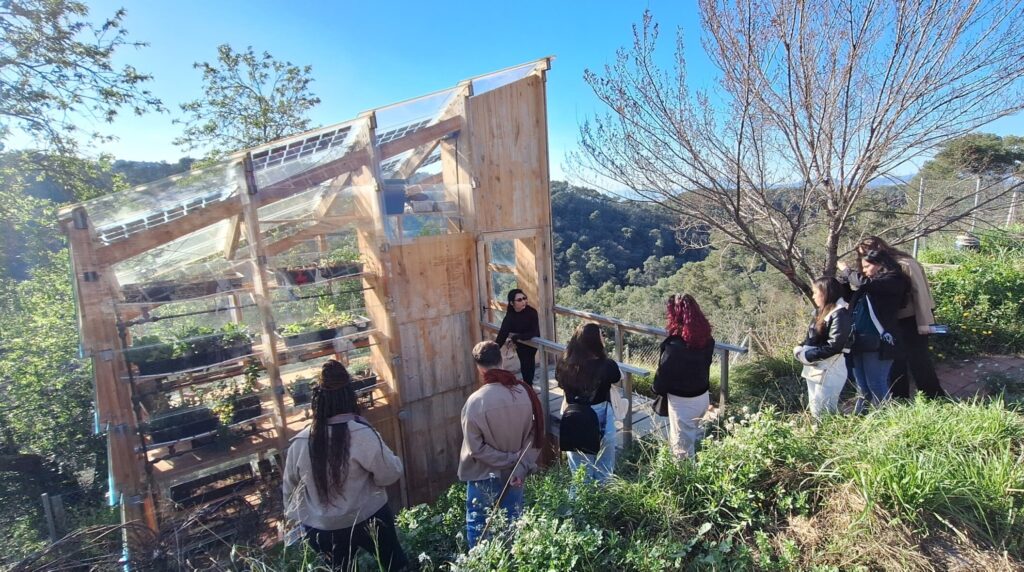
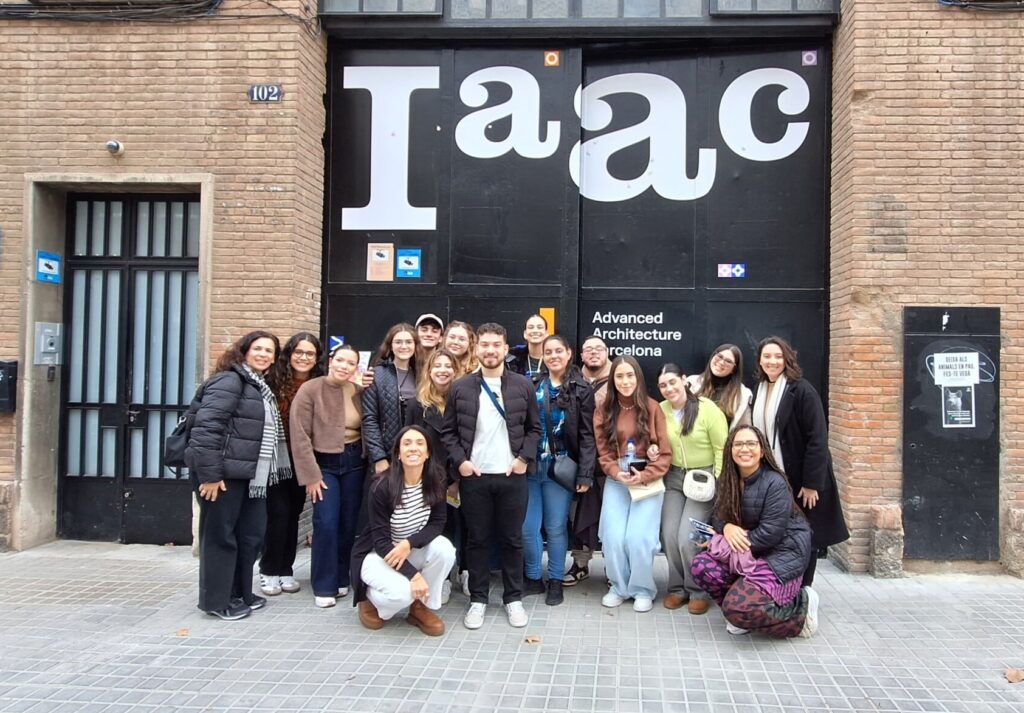
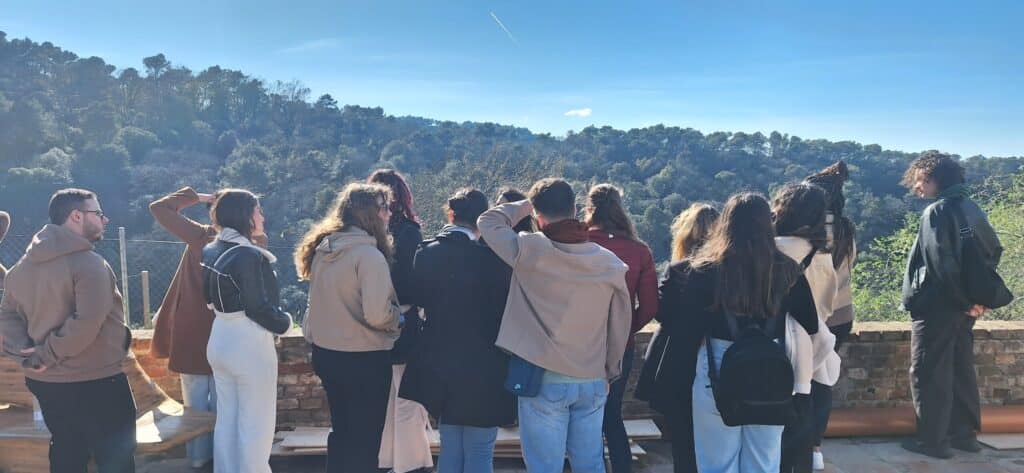
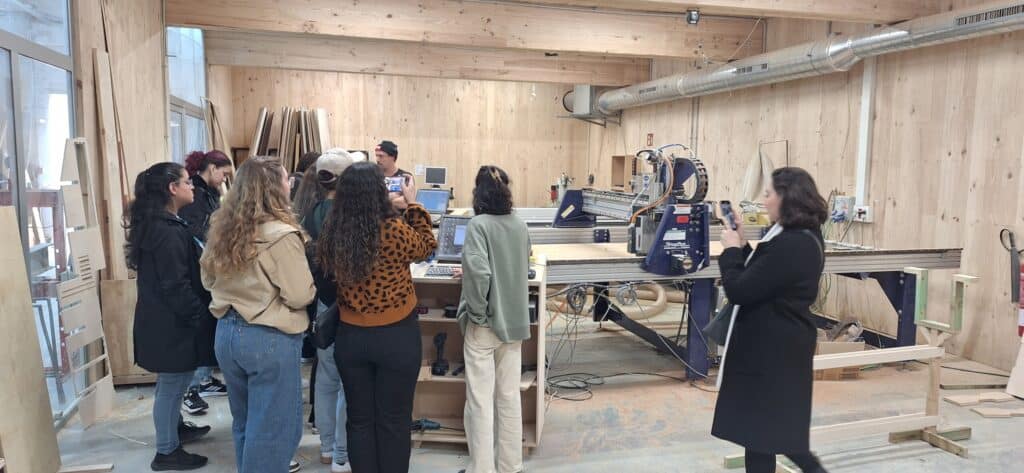
In collaboration with CESUPA and TREBEA, we will showcase how Fab Labs and similar infrastructures can act as catalysts for regenerative economies – spaces where knowledge, culture, ecology, and the sociobioeconomy converge to generate sustainable livelihoods while protecting forests and natural ecosystems. Grounded in a learning-by-doing approach, this process co-create pathways for such infrastructures to adapt to local realities, becoming meaningful and context-driven platforms capable of shaping their own modes of governance. This journey, continuing through 2026, builds on more than a year of collective learning and sustained cooperation as a long-term process of local agency and collective innovation.
Our shared objectives include:
- Supporting fostering local economies through meaningful innovation in the Pan Amazon.
- Demonstrating prototyping as a right, enabling communities to experiment with solutions to climate, social, and economic challenges.
- Building bridges between grassroots practices and institutional frameworks, fostering policy environments that recognise the value of open, distributed, and collaborative models that support both social impact and biodiversity conservation
Looking Forward
Beyond COP30, this alliance seeks to establish long-term collaborations that expand the reach of Fab Labs and Prototyping Labs across Latin America. By connecting technology, design, and social impact, we aim to nurture a new generation of regenerative innovators, capable of designing futures rooted in care, knowledge sharing, and ecological balance.